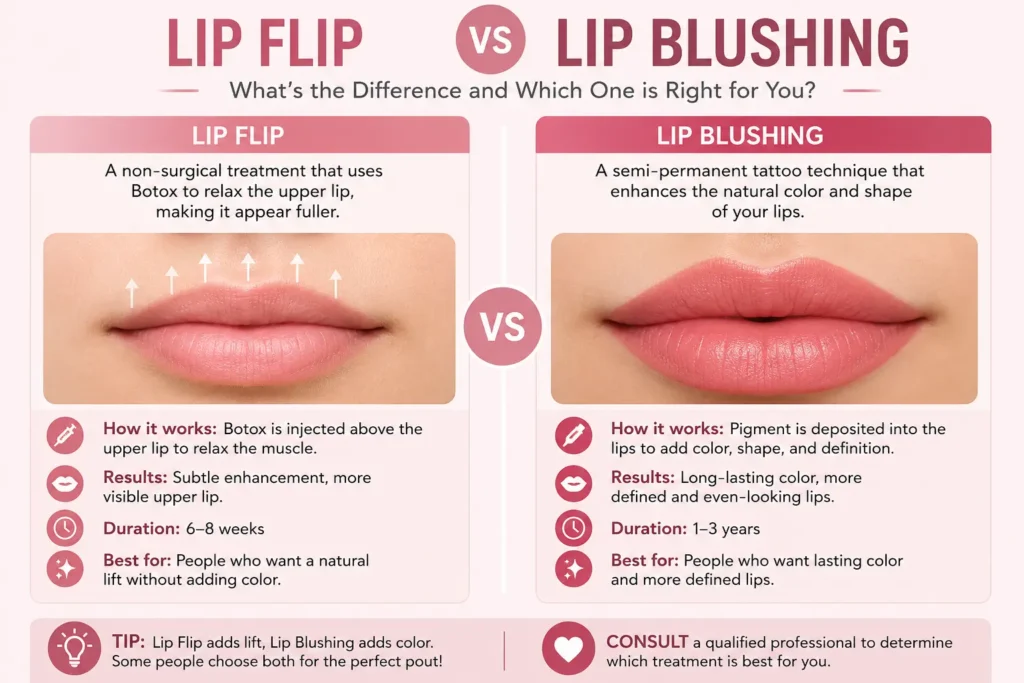
If you’ve landed on lip flip vs lip blushing while researching lip treatments, there’s a good chance you’re mixing up two procedures that don’t actually compete with each other. A lip flip uses a neuromodulator to relax the upper lip muscle so more of your natural lip shows. Lip blushing is a semi-permanent cosmetic tattoo that deposits pigment into the lip to enhance color, symmetry, and definition. One changes shape. The other changes color.
This confusion is understandable. Both are non-surgical, both avoid the “overdone” look associated with heavy filler, and both are popular for creating a fuller, more polished lip appearance. But they solve completely different concerns, involve very different processes, and last for very different lengths of time.
This guide breaks down exactly what each treatment does, how they compare on pain, healing, and longevity, and how to figure out whether you need a lip flip, lip blushing, or possibly both.
Table of Contents
Quick Answer: What’s the Difference Between a Lip Flip and Lip Blushing?
A lip flip is a neuromodulator injection that relaxes the upper lip muscle so more of your natural lip is visible, lasting about 2 to 4 months. Lip blushing is a semi-permanent tattoo that deposits pigment into the lip to enhance color and definition, lasting 1 to 3 years. They address shape and color separately, not the same concern.
Key Takeaways
- A lip flip repositions your existing lip using a neuromodulator like Botox — it changes shape, not color.
- Lip blushing is a cosmetic tattoo that deposits pigment into the lip to enhance color, symmetry, and border definition.
- Lip flip results last 2 to 4 months; lip blushing typically lasts 1 to 3 years.
- Lip blushing involves a longer healing process, generally 1 to 2 weeks of visible healing and up to 6 weeks for full color settling.
- The two treatments are often combined, since one changes shape and the other changes color.
- Neither treatment adds significant volume — for that, you’d need dermal filler.
What Is a Lip Flip?
A lip flip is a non-surgical treatment that uses a small amount of neuromodulator, typically Botox, Dysport, Xeomin, or Jeuveau, injected into the orbicularis oris muscle just above the upper lip. Once the muscle relaxes, it stops curling inward, allowing more of your natural lip to show when you smile or talk.
This is purely a repositioning treatment. It doesn’t change lip color, add pigment, or increase volume. If you’re comparing this to other volumizing options, it helps to first understand lip flip vs lip filler, since filler and lip blushing solve different problems from the lip flip itself. You can see the injection process explained in how does a lip flip work and browse real results in lip flip before and after.
What Is Lip Blushing?
Lip blushing is a semi-permanent cosmetic tattooing procedure that deposits pigment into the upper layers of the lip’s skin. A trained technician uses a fine needle or permanent makeup device to add color, even out uneven pigmentation, sharpen the lip border, and create the appearance of slightly fuller, more defined lips through shading and color placement, not physical volume.
Unlike a lip flip, lip blushing has nothing to do with muscles or neuromodulators. It’s closer in concept to microblading for eyebrows, except applied to the lips. Results typically require two to three sessions spaced a few weeks apart to build up the color properly, followed by touch-ups every one to three years as the pigment gradually fades.
Lip Flip vs Lip Blushing: Full Comparison
| Feature | Lip Flip | Lip Blushing |
| What it changes | Lip shape and visibility | Lip color and definition |
| Mechanism | Neuromodulator relaxes upper lip muscle | Pigment deposited into lip skin |
| Adds volume? | No | No, may create a subtle visual illusion of fullness |
| Typical duration | 2–4 months | 1–3 years |
| Healing time | Little to none | 1–2 weeks visible healing, up to 6 weeks for final color |
| Sessions needed | Usually one | Typically two to three initial sessions |
| Pain level | Minimal, quick pinches | Mild, numbing cream used, often rated low on pain scales |
| Best for | Gummy smile, thin lip visibility | Uneven lip color, faded lip border, asymmetry |
| Cost per session | Lower | Higher, due to multiple sessions |
| Can combine with other treatments? | Yes, often with filler | Yes, often with lip flip or filler |
How Long Does Each Treatment Last?
A lip flip typically lasts 2 to 4 months, since the neuromodulator gradually wears off and the muscle returns to its normal function. You can see a detailed breakdown in how long does a lip flip last.
Lip blushing lasts considerably longer, generally 1 to 3 years, though this depends on your skin type, sun exposure, and how your body metabolizes the pigment. Because it’s a tattoo rather than an injectable, it doesn’t fully disappear — it gradually lightens over time and can be refreshed with periodic touch-ups.
Healing and Downtime: Lip Flip vs Lip Blushing
A lip flip involves very little downtime. Most people go about their day right after treatment, with results settling in over a few days to a week. See does a lip flip hurt for more detail on the sensation involved.
Lip blushing has a longer healing curve. Expect noticeable swelling and a much bolder color for the first few days, followed by peeling and gradual lightening over one to two weeks. The final, settled color typically isn’t visible until around four to six weeks after treatment. Aftercare during this window, including avoiding sun exposure and certain foods, plays a big role in how the color heals.
Does Lip Blushing Hurt More Than a Lip Flip?
Generally, yes, though both are manageable. A lip flip involves a few quick injections with minimal discomfort. Lip blushing takes longer, often 60 to 90 minutes per session, and involves a numbing cream that’s typically reapplied partway through. Most clients describe the pain as mild, but the longer duration of the procedure and subsequent healing period make it feel more involved overall compared to a lip flip.
Can You Combine a Lip Flip and Lip Blushing?
Yes, and this is actually a popular combination, since the two treatments address entirely different concerns. A lip flip changes how much of your lip is visible, while lip blushing enhances the color and definition of that same lip. Many patients get a lip flip first to establish the shape they want, then add lip blushing once healed, or vice versa depending on their provider’s recommendation. If you’re also interested in added volume alongside either treatment, lip flip with filler covers how that combination typically works.
Which Treatment Solves Your Specific Concern?
| Your Concern | Better Option |
| Thin upper lip that disappears when you smile | Lip flip |
| Gummy smile | Lip flip |
| Faded, uneven, or pale lip color | Lip blushing |
| Undefined or asymmetrical lip border | Lip blushing |
| Want subtle change with quick recovery | Lip flip |
| Comfortable with more downtime for longer-lasting results | Lip blushing |
| Want both shape and color addressed | Combine both |
Common Mistakes to Avoid
- Assuming lip blushing adds real volume. It creates a visual illusion of fullness through color and shading, not physical size.
- Expecting a lip flip to fix uneven lip color. That’s a job for lip blushing, not a neuromodulator.
- Booking lip blushing without planning for the healing timeline. Some people are surprised by how bold the color looks in the first week before it settles.
- Choosing an inexperienced technician for lip blushing. Because it’s a tattoo, mistakes in color or shape are much harder to correct quickly than with a lip flip, which simply wears off.
- Skipping a patch test or consultation. This matters more for lip blushing given the semi-permanent nature of the pigment.
Tips Before Choosing Either Treatment
- Get clear on whether your main concern is shape (lip flip) or color and definition (lip blushing).
- Ask your lip blushing technician about their specific certification and portfolio of healed results, not just fresh photos.
- Avoid blood thinners and alcohol for 24–48 hours before either treatment to reduce bruising risk.
- Plan lip blushing appointments well ahead of major events, since final color isn’t visible for several weeks.
- If combining treatments, ask your provider about the ideal order and spacing between a lip flip and lip blushing sessions.
Warnings and Limitations
A lip flip carries standard neuromodulator risks, including temporary bruising or an uneven smile if the muscle relaxes unevenly, covered in more detail in lip flip side effects. Lip blushing carries risks associated with any tattooing procedure, including infection if aftercare isn’t followed properly, allergic reaction to pigment, and the possibility of uneven color or a shade that doesn’t match expectations. Because lip blushing is semi-permanent, correcting an unwanted result takes more time and additional sessions than simply waiting for a lip flip to wear off.
Both treatments should only be performed by a licensed, appropriately trained professional. A lip flip should be done by a physician, nurse injector, or physician assistant trained in facial injectables, while lip blushing should only be performed by a certified permanent makeup artist or cosmetic tattoo technician. This article is for general information and isn’t a substitute for a professional consultation to assess your specific lips and goals.
Frequently Asked Questions
Is lip blushing the same as a lip flip? No. A lip flip changes lip shape and visibility using a neuromodulator, while lip blushing is a semi-permanent tattoo that changes lip color and definition. They address entirely different concerns.
Which lasts longer, a lip flip or lip blushing? Lip blushing lasts considerably longer, typically 1 to 3 years, compared to the 2 to 4 month duration of a lip flip.
Can lip blushing make my lips look bigger? It can create a subtle visual illusion of fullness through shading and color placement, but it doesn’t add physical volume the way filler does.
Is lip blushing more painful than a lip flip? Most people rate both as mild, but lip blushing takes longer per session and involves more visible healing afterward, which can make it feel more involved overall.
Can I get a lip flip and lip blushing at the same time? Many providers recommend spacing the two treatments apart rather than doing them simultaneously, though the exact timing depends on your provider’s protocol.
How many sessions does lip blushing require? Most people need two to three initial sessions spaced several weeks apart to build up the pigment properly, followed by periodic touch-ups.
Does lip blushing fade completely? Yes, since it’s semi-permanent rather than a traditional tattoo. The pigment gradually lightens over one to three years and can be refreshed with a touch-up.
Will lip blushing look natural? When done by an experienced, certified technician, lip blushing is designed to look like a soft, natural tint rather than an obvious tattoo.
Can men get a lip flip or lip blushing? Yes, both treatments are used by men, though lip blushing for men is often approached with more subtle, natural pigment tones.
Is lip blushing safe if I have lip filler? Many people combine lip blushing with existing filler, since blushing addresses color and definition rather than volume. Discuss your filler history with your technician beforehand.
What happens if I don’t like my lip blushing color? Because it’s semi-permanent, adjustments typically require additional sessions rather than an immediate fix. This is why choosing an experienced, certified technician matters so much.
Do lip flip results disappear completely? Yes. Since a lip flip relies on a neuromodulator that naturally metabolizes, results fade completely over 2 to 4 months unless the treatment is repeated.
Summary: Lip Flip vs Lip Blushing
The lip flip vs lip blushing comparison really isn’t about which treatment is better — it’s about which concern you’re trying to solve. A lip flip changes the shape and visibility of your lip using a neuromodulator, with results lasting a few months. Lip blushing changes lip color and definition through semi-permanent pigment, with results lasting one to three years.
Many patients end up choosing both, since a fuller-looking, well-defined lip often benefits from addressing shape and color together. A consultation with an experienced injector for the lip flip, and a certified permanent makeup artist for lip blushing, is the best way to figure out which treatment, or combination, matches what you’re picturing for your lips.