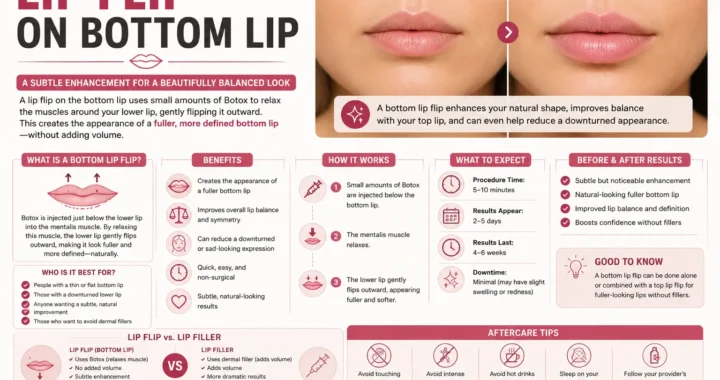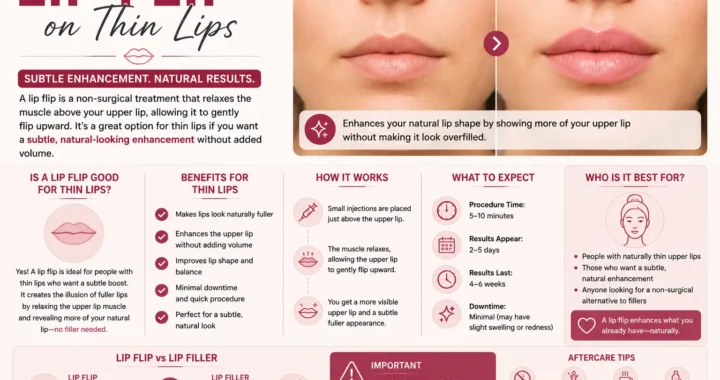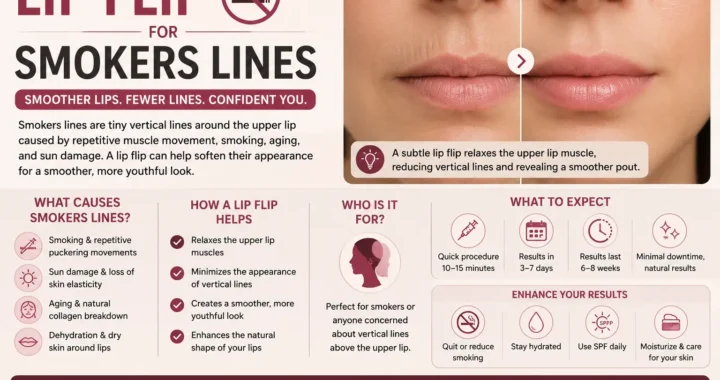

If you’ve scrolled through before-and-afters online, you’ve probably wondered how a lip flip work actually happens without any filler at all. Unlike lip injections that add volume, a lip flip relies on a small amount of Botox (or a similar neuromodulator) placed strategically around the mouth. It’s subtle, it’s fast, and when it’s done well, it looks completely natural.
This guide breaks down exactly how does a lip flip work from a muscle-and-nerve standpoint, what happens in your body step by step, how long it takes to kick in, and how it compares to fillers. You’ll also see where the treatment falls short, who’s a good candidate, and what questions to ask your injector before booking.
Table of Contents
Quick Answer: How Does a Lip Flip Work?
A lip flip works by injecting a small dose of botulinum toxin (like Botox) into the orbicularis oris muscle that circles the mouth. This temporarily relaxes the muscle’s pull inward and downward, allowing the upper lip to “flip” outward and appear fuller. No volume is added — the effect comes purely from relaxed muscle mechanics.
Key Takeaways
- A lip flip uses botulinum toxin, not dermal filler, to change how the upper lip sits
- The orbicularis oris muscle relaxes, letting the lip roll slightly outward for a fuller look
- Results typically appear within 3 to 7 days and last 6 to 12 weeks
- It doesn’t add volume — it changes lip position and muscle tension
- Best suited for people who want subtle enhancement, a softer smile line, or reduced gummy smile
- Not a substitute for filler if you want noticeably bigger, plumper lips
What Is a Lip Flip, Exactly?
A lip flip is a cosmetic injectable treatment that uses a neuromodulator, most commonly Botox, Dysport, or Xeomin, to relax the muscle around the mouth. Instead of adding physical volume like a filler does, it changes the way your existing lip tissue sits and moves.
The result is an upper lip that appears slightly fuller and more visible when relaxed, plus a softer, less “gummy” smile for people whose gums show more than they’d like. If you’re curious about the visual difference this makes, our lip flip before and after photos page shows real transformation examples across different lip shapes.
The Mechanism: How Does a Lip Flip Work Step by Step?
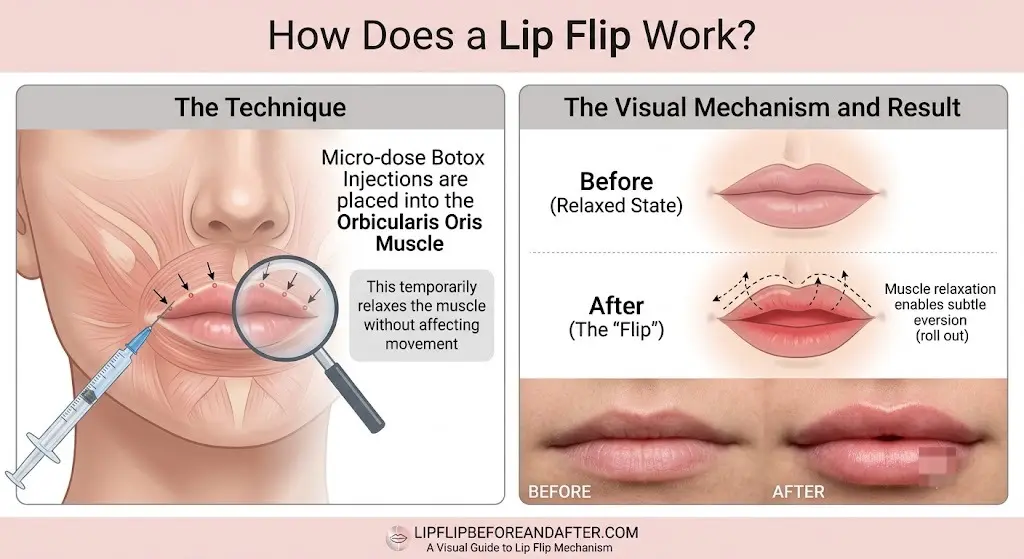
Understanding how does a lip flip work means understanding one muscle: the orbicularis oris. This is the circular muscle that wraps around your mouth and controls lip movement — puckering, pressing, and rolling the lips inward.
Here’s the process from injection to visible result:
- Numbing (optional). A topical numbing cream may be applied for a few minutes to reduce discomfort.
- Targeted injection. The injector places small amounts of botulinum toxin into specific points along the upper lip border, usually 4 to 6 injection sites just above the vermilion border (the line where your lip color meets your skin).
- Toxin binds to nerve endings. The botulinum toxin blocks the release of acetylcholine, the chemical messenger nerves use to tell muscles to contract.
- Muscle relaxation begins. Without that signal, the orbicularis oris can’t pull the upper lip inward and downward as strongly as before.
- The lip rolls outward. With less inward tension, the natural elasticity of the lip tissue allows it to sit slightly rolled out, exposing a bit more of the pink lip tissue and creating a fuller-looking pout.
- Smile softens. Because the muscle also lifts the lip during smiling, relaxing it reduces how high the lip rises — which is why a lip flip can also minimize a gummy smile.
This is the core botox effect that defines the entire treatment: it’s a mechanism of muscle relaxation, not tissue addition.
Featured snippet answer: A lip flip works by weakening the orbicularis oris muscle around the mouth with botulinum toxin, so the upper lip rolls slightly outward instead of being pulled tightly inward, creating a fuller appearance without added volume.
Why Muscles Matter More Than Volume Here
Most people assume any lip enhancement is filler-based. But the muscles around your mouth are doing constant, active work — pursing, speaking, smiling, sipping. That tension is what keeps your upper lip tucked in tighter than it might naturally sit.
When the orbicularis oris is relaxed by even a small amount:
- Muscle pull on the upper lip decreases
- The lip’s natural tissue is less restrained
- More of the pink lip becomes visible when your face is at rest
- The lip appears to “flip” up and out slightly
This is fundamentally different from a filler, which physically adds hyaluronic acid gel under the skin to increase volume. If you’re deciding between the two, our detailed comparison on what is a lip flip walks through both mechanisms side by side.
Lip Flip vs. Lip Filler: What’s the Difference?
| Feature | Lip Flip | Lip Filler |
| Main ingredient | Botulinum toxin (Botox, Dysport, Xeomin) | Hyaluronic acid gel |
| Mechanism | Relaxes orbicularis oris muscle | Adds physical volume |
| Adds size/volume | No | Yes |
| Best for | Subtle roll-out, softer smile, gummy smile | Noticeably fuller, plumper lips |
| Results appear | 3–7 days | Immediately (with some swelling) |
| Duration | 6–12 weeks | 6–18 months |
| Reversible | Wears off naturally | Can be dissolved with hyaluronidase |
| Typical cost | $100–$400 | $500–$800+ per syringe |
Many people actually combine both treatments for a fuller yet naturally-shaped result. You can see how this looks on different lip types in our botox lip flip guide.
How Long Does It Take to See Results?
This is one of the most common questions after the mechanism itself. Here’s the general timeline:
- Day 1–2: No visible change yet; the toxin is still binding to nerve endings
- Day 3–5: Early softening of muscle tension begins
- Day 7: Most people see the full flip effect
- Week 2: Final settled result, including any residual swelling gone
- Week 6–12: Effect gradually fades as nerve signaling returns to normal
- Week 12+: Muscle function returns to baseline; touch-up needed to maintain the look
If you want to track what this progression actually looks like, our lip flip before and after page has a week-by-week visual breakdown.
What Does a Lip Flip Feel Like During and After?
During the injections, most people describe a quick pinching or stinging sensation at each site — the whole appointment usually takes 10 to 15 minutes. Afterward, it’s common to experience:
- Mild swelling at injection points for a few hours
- Slight tenderness when pressing on the lip
- A temporary “off” feeling when puckering, sipping through a straw, or whistling
- Occasional light bruising (more likely if you’re on blood thinners or NSAIDs)
These effects typically resolve within a day or two. Some people also notice their smile looks and feels slightly different for the first week while the muscle adjusts — this is expected and settles down as the treatment reaches full effect.
Who Is a Good Candidate for a Lip Flip?
A lip flip tends to work best for people who:
- Want subtle, natural-looking enhancement rather than dramatic volume
- Have thinner lips that “disappear” when smiling
- Deal with a gummy smile and want it softened
- Are curious about lip enhancement but not ready to commit to filler
- Want to test how a fuller lip look suits their face before trying longer-lasting options
It may be less ideal for people who want significant size increase, since the treatment doesn’t add tissue. If your goal is visibly bigger lips, filler alone or combined with a flip is usually a better fit — our page on lip flip before and after thin lips covers this distinction in more detail.
Lip Flip Results by Lip Type
The way muscle relaxation reads visually can vary depending on your starting lip shape:
- Thin lips: Subtle definition boost; often paired with filler for more noticeable change (see examples)
- Full lips: Softer smile curve and slightly more visible pink lip tissue (see examples)
- Gummy smile: Noticeably reduced gum show when smiling (see examples)
- Side profile changes: Slight forward roll visible from the side (see examples)
For a broader look at outcomes across ages and genders, check our lip flip before and after men and lip flip before and after older woman galleries.
Common Mistakes That Affect How Well a Lip Flip Works
- Going to an inexperienced injector. Precise placement matters — too much toxin or the wrong spot can affect speech, eating, or create an uneven smile.
- Expecting filler-level volume. A flip changes shape and position, not size. Setting the right expectation up front avoids disappointment.
- Skipping the touch-up window. Since results fade in 6–12 weeks, waiting too long between sessions means starting from scratch each time.
- Ignoring aftercare basics. Rubbing the area, lying flat too soon, or heavy exercise right after injection can affect how evenly the toxin settles.
Tips for the Best Lip Flip Outcome
- Book with an injector who specializes in perioral (around-the-mouth) anatomy specifically
- Avoid alcohol and blood-thinning medication for 24 hours before your appointment, if your doctor approves
- Stay upright and avoid touching the treated area for several hours afterward
- Schedule any important events (weddings, photos) at least two weeks after treatment, not the day before
- Ask your injector to start conservatively — you can always add more at a touch-up, but you can’t easily undo an overdone flip immediately
Pros and Cons of a Lip Flip
Pros
- Quick procedure with minimal downtime
- Natural-looking, subtle enhancement
- Can soften a gummy smile
- Lower cost than filler
- No added volume means less risk of an “overfilled” look
Cons
- Results are temporary (6–12 weeks)
- Doesn’t add actual lip size
- Temporary changes to lip function (straw drinking, whistling) possible
- Requires a skilled injector to avoid asymmetry
- Not a permanent or long-lasting solution on its own
Safety and Limitations
Botulinum toxin treatments are generally well tolerated when performed by a licensed, experienced provider, but they aren’t risk-free. Possible side effects include temporary bruising, swelling, or, rarely, mild asymmetry in the smile if the toxin spreads slightly beyond the intended muscle. These effects are almost always temporary and resolve as the toxin wears off.
This treatment isn’t appropriate for everyone. People who are pregnant, breastfeeding, or have certain neuromuscular conditions are typically advised against botulinum toxin injections. As with any injectable procedure, results and experience can vary from person to person, and a consultation with a qualified, licensed provider is the best way to determine whether a lip flip is appropriate for your anatomy and goals.
Frequently Asked Questions
Does a lip flip hurt? Most people feel a brief pinching or stinging sensation during injection, similar to a quick pinprick. Numbing cream can be used if you’re sensitive to needles, and the discomfort passes within seconds of each injection.
How long does a lip flip last? A lip flip typically lasts 6 to 12 weeks. Because the treatment relies on temporarily relaxing muscle activity, results fade gradually as normal nerve signaling returns.
Can you eat and drink normally after a lip flip? Yes, but some people notice a temporary change in how it feels to drink through a straw or purse their lips tightly for the first few days while the muscle adjusts.
Does a lip flip make your lips bigger? Not in terms of added volume. It changes the position of your existing lip tissue so it appears fuller, especially at rest and when smiling, but it doesn’t increase actual lip size the way filler does.
Can I combine a lip flip with filler? Yes, this is a common combination. The filler adds volume while the flip softens muscle tension, often creating a fuller and more balanced result together. Ask your injector about sequencing if you’re considering both.
Is a lip flip safe? Botulinum toxin injections are widely used and considered safe when performed by a licensed, trained provider. As with any cosmetic procedure, discussing your medical history and expectations beforehand reduces risk.
How much does a lip flip cost? Cost varies by provider and location, but lip flips generally range from $100 to $400 per session, since only a small amount of toxin is used compared to treatments targeting larger muscle groups.
What’s the difference between a lip flip and a Russian lip technique? A lip flip uses botulinum toxin to relax muscle tension for a subtle roll-out effect. The Russian lip technique is a filler injection method that creates height and a fox-eye-like lip shape by placing filler in a specific fan pattern — they’re not the same treatment.
Will people be able to tell I got a lip flip? When done well, the change is subtle enough that most people notice you look refreshed rather than “done.” Overcorrection is usually a sign of too much product or imprecise placement.
Can a lip flip fix uneven lips? It can help minor asymmetry by adjusting muscle tension differently on each side, but significant structural asymmetry may need a different approach, such as filler, to correct fully.
How soon can I get another lip flip after the effects wear off? Once the initial treatment fully wears off, typically around 10 to 12 weeks, you can schedule a repeat treatment. Some people space these out further as their muscles adapt to reduced activity over time.
Does a lip flip affect your smile permanently? No. All effects are temporary. Once the botulinum toxin wears off, muscle function returns to its normal baseline within a few months.
Summary: How Does a Lip Flip Work?
A lip flip works through a simple but precise mechanism: a small dose of botulinum toxin relaxes the orbicularis oris muscle around the mouth, reducing its pull on the upper lip so it rolls slightly outward. No filler, no added volume — just a temporary shift in muscle tension that can make lips look fuller and soften a gummy smile.
Results usually show up within a week and last two to three months, making it a low-commitment way to test subtle lip enhancement. If you’re comparing your options, browsing real lip flip results or learning more about the lip flip procedure itself is a good next step before booking a consultation with a licensed injector.