
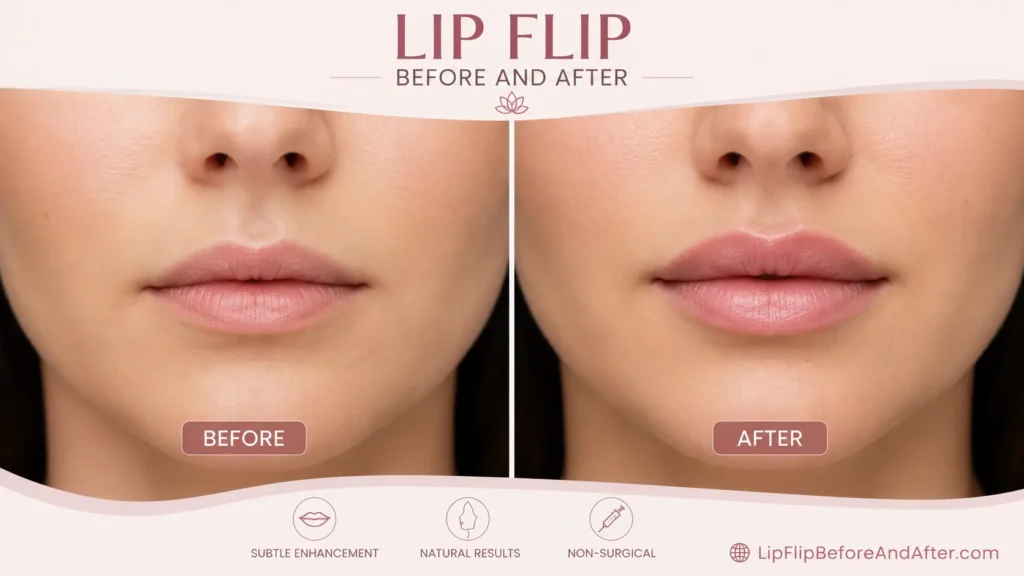
A lip flip uses a small amount of neuromodulator — like Botox, Dysport, Xeomin, or Daxxify — to relax the muscle around the upper lip so it rolls slightly outward. It’s often confused with lip filler, but the two work in completely different ways, and the before-and-after results look different too.
If you’ve searched for “lip flip before and after,” you’ve probably noticed that photos online can be inconsistent — some show dramatic change, others barely any. That’s because a lip flip is a subtle treatment, and how it looks depends on your anatomy, your injector’s technique, and exactly when the photo was taken during the healing process.
This guide walks through the real timeline, honest before-and-after photos guidance, cost, recovery, risks, and how a lip flip compares to lip filler — so you know exactly what to expect before you book a consultation.
Table of Contents
A lip flip typically shows visible results within 3–7 days, peaks around day 10–14, and lasts 6–12 weeks. Unlike lip filler, it doesn’t add volume — it makes the upper lip appear slightly fuller by relaxing the muscle that pulls it inward when you smile.
Key takeaways:
- A lip flip subtly reshapes the lip — it does not add volume the way filler does
- Results are temporary, typically lasting 6–12 weeks
- Early photos (day 1–2) often show injection-related swelling, not the actual result
- It’s best suited for people who want a small, natural lift rather than dramatic fullness
- Always confirm your injector is licensed and experienced with lip anatomy before treatment
Key Facts at a Glance
| Fact | Detail |
| What it uses | Neuromodulator (Botox, Dysport, Xeomin, or Daxxify) |
| Treatment area | Orbicularis oris muscle around the upper lip |
| Procedure time | 10–15 minutes |
| Onset of visible change | 3–5 days |
| Full result visible | 10–14 days |
| Duration | 6–12 weeks on average |
| Downtime | None to minimal |
| Average cost (U.S.) | $75–$350 per session, depending on provider and units used |
| Pain level | Mild; a brief pinching sensation |
| Reversible? | Wears off naturally over time |
What Is a Lip Flip?
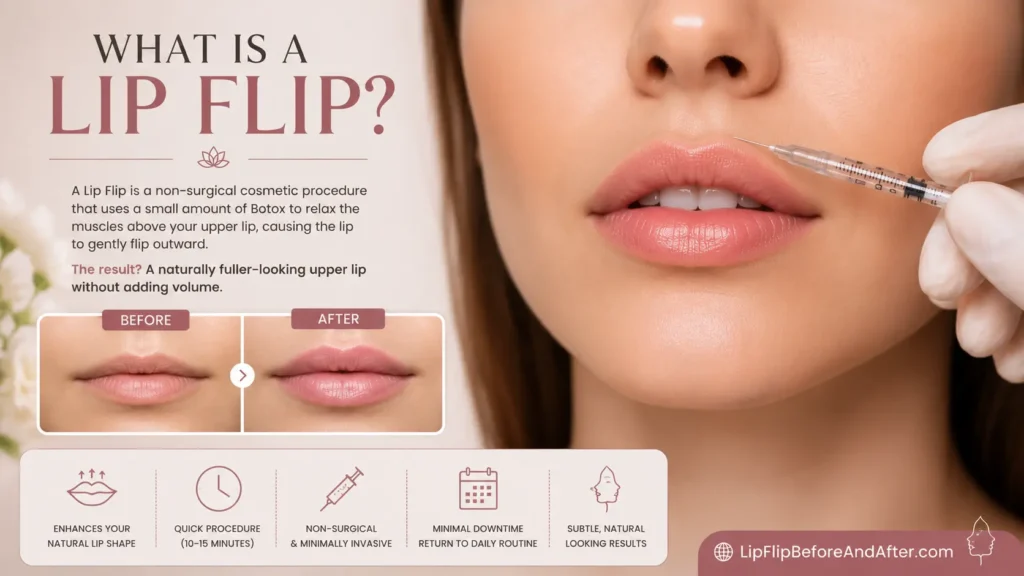
A lip flip is a cosmetic treatment that uses a small dose of neuromodulator injected into the muscle around the upper lip — the orbicularis oris. This muscle normally pulls the upper lip inward and tightens it, especially when you smile or purse your lips.
When the muscle is gently relaxed, the upper lip rolls or “flips” slightly outward, exposing a bit more of the pink part of the lip. The effect makes the lip look a little fuller and can soften a gummy smile, but it does not physically add any tissue or volume.
This is the main point of confusion for most people: a lip flip and lip filler use completely different substances and produce different types of results, even though both can make lips appear fuller. Understanding the differences becomes much easier when comparing lip flip before and after results, as they clearly show how a lip flip subtly enhances the upper lip, while fillers add noticeable volume and shape.
How a Lip Flip Works
The orbicularis oris muscle circles the mouth and controls lip movement. A small amount of neuromodulator injected at specific points along the upper lip border temporarily blocks nerve signals to part of that muscle. With the muscle slightly relaxed, it can no longer pull the lip in as tightly, so the lip naturally sits in a more “flipped out,” fuller-looking position — particularly noticeable when smiling or speaking.
Because the treatment only relaxes muscle activity and doesn’t add material, the change is subtle by design. It works with your existing lip shape rather than altering it dramatically.
Lip Flip Before and After: The Real Timeline
One of the most common mistakes people make is judging their results too early. The timeline below reflects what typically happens after treatment — not an idealized version.
| Day | What You’ll Typically See |
| Day 0 (injection) | Slight redness, small needle marks, possible temporary swelling |
| Day 1–2 | Lip may look mildly uneven or “flat” while the neuromodulator starts working |
| Day 3–5 | First visible signs of the flip effect begin to appear |
| Day 7–10 | Muscle relaxation becomes more noticeable; the lip appears to roll slightly outward |
| Day 10–14 | Full, final result is visible — the best time to take accurate “after” photos |
| Week 6–8 | The effect may begin to gradually soften |
| Week 10–12 | Effect typically fully fades as the muscle regains normal function |
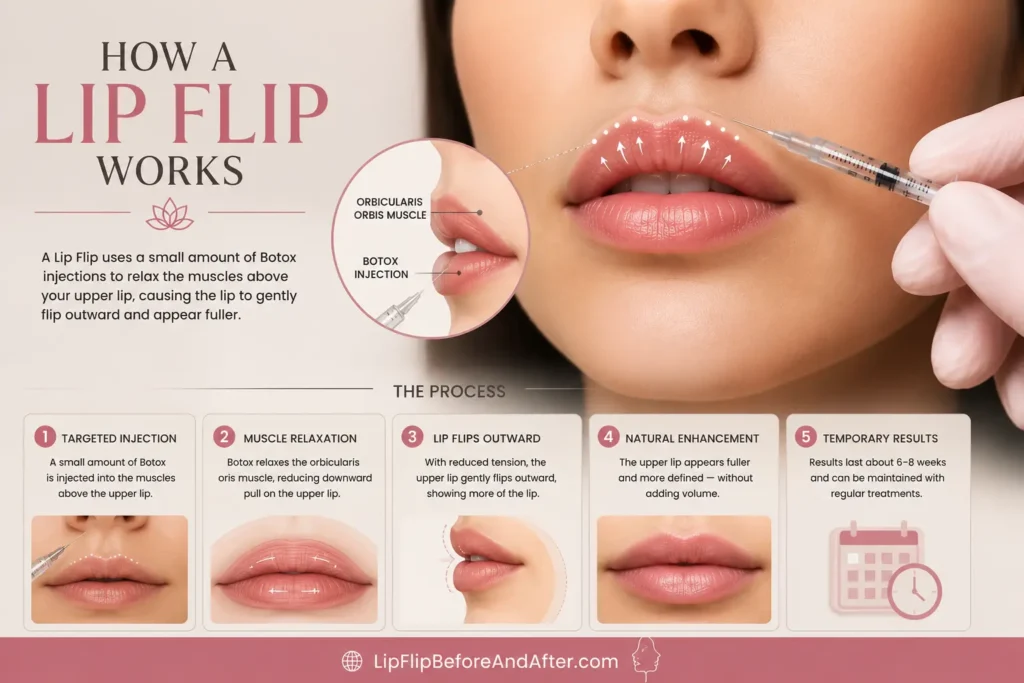
Why Day-1 Photos Are Misleading
Right after the injection, some swelling from the needle itself can make the lip look temporarily different — this is not the actual lip flip effect. That swelling usually resolves within a day or two, well before the neuromodulator has even started working. If you’re comparing before-and-after photos you find online, check whether the “after” photo was taken in the first 48 hours or closer to the two-week mark, since that difference changes what you’re actually seeing.
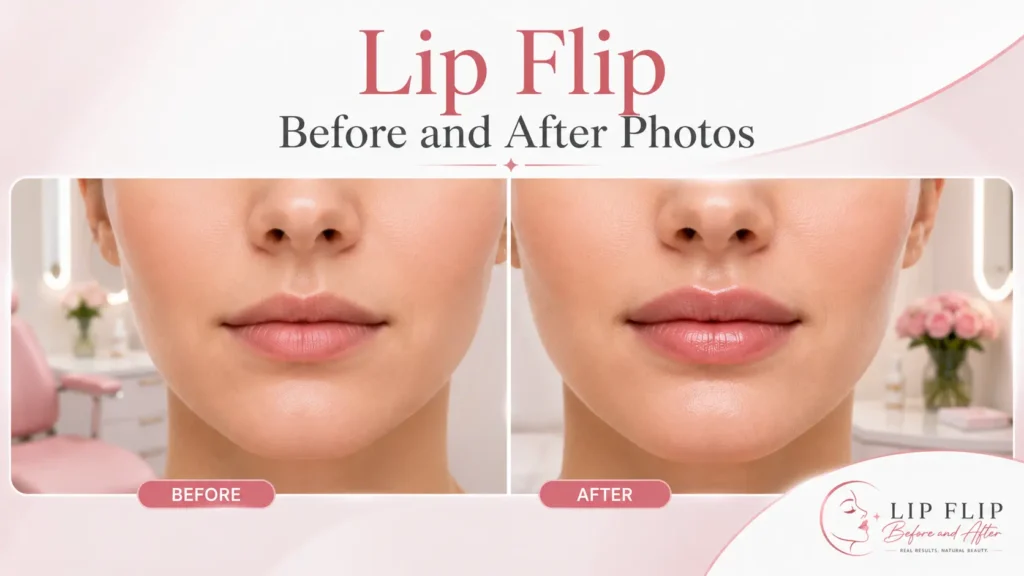
Lip Flip Before and After Photos
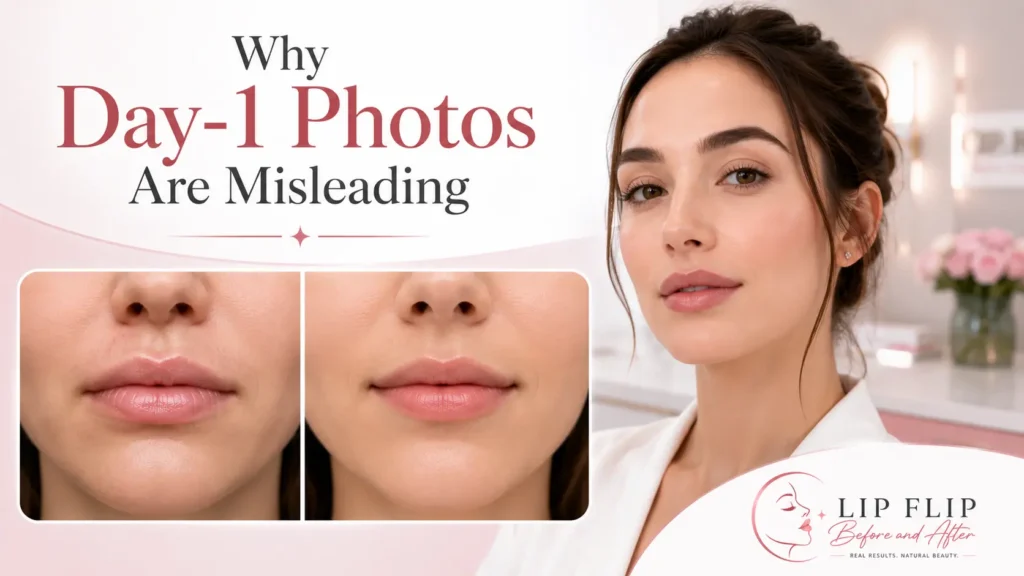
When looking at before-and-after photos — whether on a provider’s website or social media — a few factors affect how reliable the comparison is:
- Timing: As shown above, results at day 14 look very different from results at day 1
- Angle and lighting: Even small changes in camera angle or lighting can make lips look fuller or thinner
- Filler vs. flip confusion: Some “lip flip” photos online are actually filler results, since the terms are often used loosely in marketing
- Individual anatomy: Two people receiving the same treatment can have noticeably different outcomes based on their natural lip shape and muscle strength
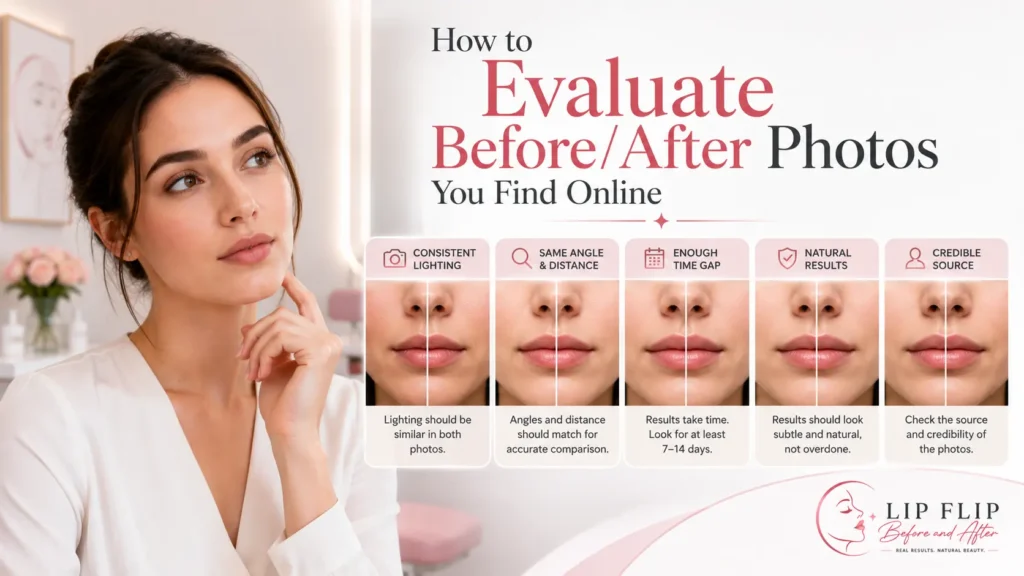
How to Evaluate Before/After Photos You Find Online
- Look for same-angle, same-lighting comparison pairs
- Check the timestamp or captions — is the “after” photo at day 14, or earlier?
- Be cautious of photos that don’t disclose whether other treatments (like filler) were combined
- Remember that any single set of photos represents one person’s anatomy and outcome, not a guarantee of your own results
Lip Flip vs. Lip Filler
These two treatments are often mentioned together, but they work in fundamentally different ways.
| Factor | Lip Flip | Lip Filler |
| What it does | Relaxes muscle for a subtle outward roll | Adds physical volume |
| Material | Neuromodulator (Botox, Dysport, etc.) | Hyaluronic acid gel |
| Adds volume? | No | Yes |
| Duration | 6–12 weeks | 6–18 months |
| Best for | Subtle lift, softening a gummy smile | Fuller, plumper lips |
| Average cost | $75–$350 | $500–$800+ per syringe |
| Reversibility | Wears off naturally | Can be dissolved with hyaluronidase if needed |
| Downtime | Minimal | Mild swelling or bruising, typically 3–7 days |
| Can they be combined? | Yes, often used together | Yes |
What Is Lip Filler?
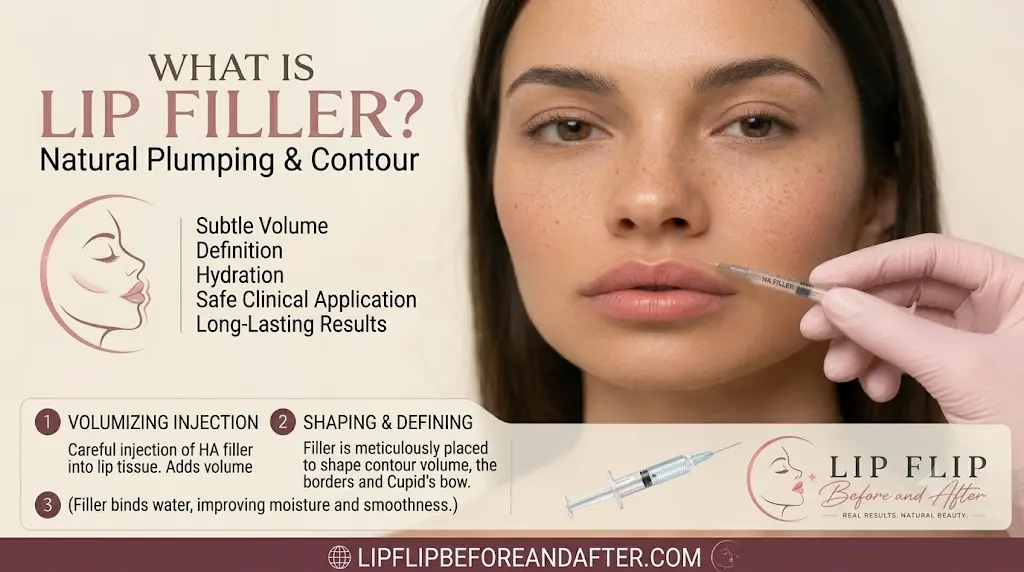
Lip filler is a hyaluronic acid–based gel injected directly into the lip tissue to add volume, shape, and definition. Unlike a lip flip, which works on the muscle, filler physically increases the size of the lip. It’s typically used for people who want noticeably fuller lips rather than a subtle reshaping.
Lip Filler Cost
Lip filler generally costs more than a lip flip, averaging $500–$800 or more per syringe, depending on the brand (such as Juvéderm, Restylane, or RHA), the provider’s experience, and your location. Some people need more than one syringe to achieve their desired look.
How Long Does Lip Filler Last?
Filler typically lasts 6 to 18 months, considerably longer than a lip flip, though this varies by product type and individual metabolism.
Does a Lip Flip Change Your Smile?
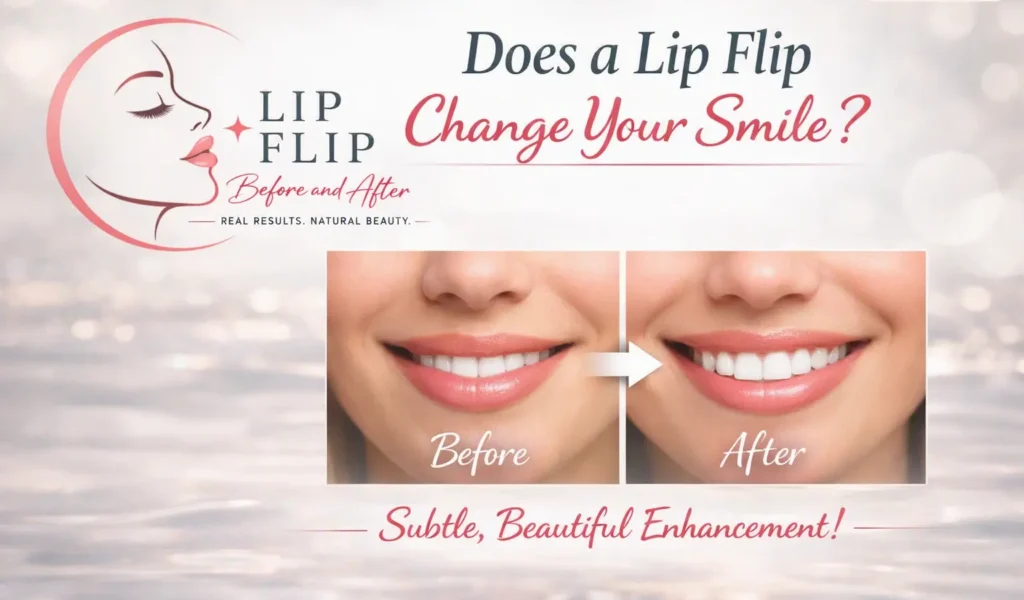
Because a lip flip slightly relaxes the muscle around the upper lip, some people notice a subtle difference in how their smile looks, especially in the first few days. Most people find this settles into a natural-looking smile once the treatment fully takes effect around day 10–14. In rare cases, if too much product is used or it’s placed incorrectly, the smile can look asymmetrical or “flatter” than usual — which is one reason injector experience matters. Speech is generally not affected, though some people notice a brief, mild change in how it feels to purse their lips or drink from a straw during the first few days.
Lip Flip and Lip Filler: Combined Before and After Gallery
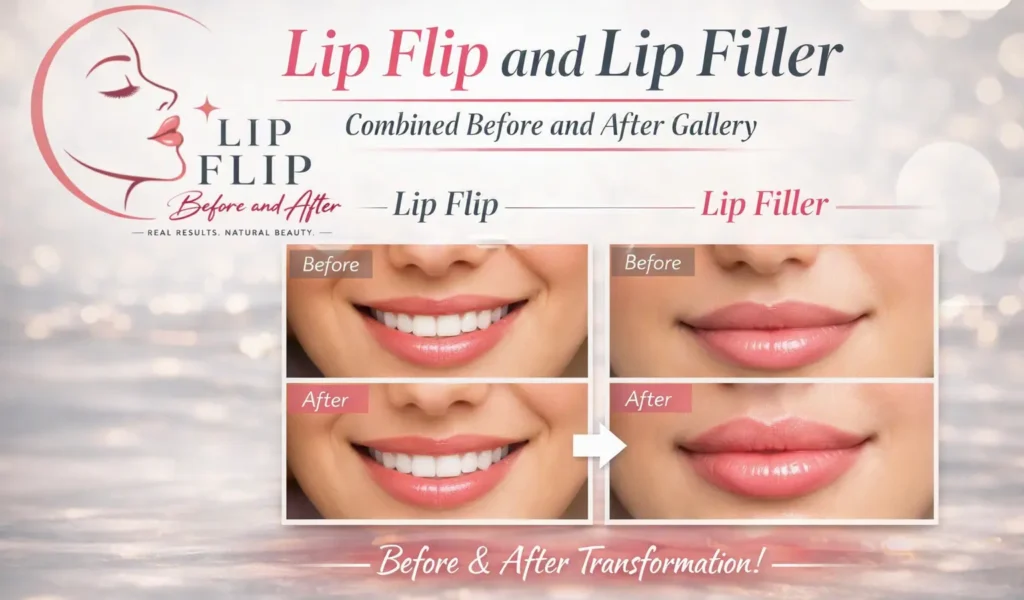
Some patients choose to combine a lip flip with filler — using the flip to subtly reshape the upper lip while filler adds overall volume. Combined results tend to vary more from person to person than single-treatment results, since two different mechanisms (muscle relaxation and added volume) are working at the same time. If you’re comparing combined before-and-after photos, keep in mind that the outcome reflects both treatments together, not what a lip flip alone would produce.
Who Is a Good Candidate for a Lip Flip?
A lip flip isn’t the right choice for everyone, and a good injector will help you determine whether it matches your goals during a consultation.

Good Candidates Typically Have
- Mild lip inversion when smiling
- A “gummy smile” they’d like to soften
- Interest in a subtle change rather than added volume
- Realistic expectations about temporary results

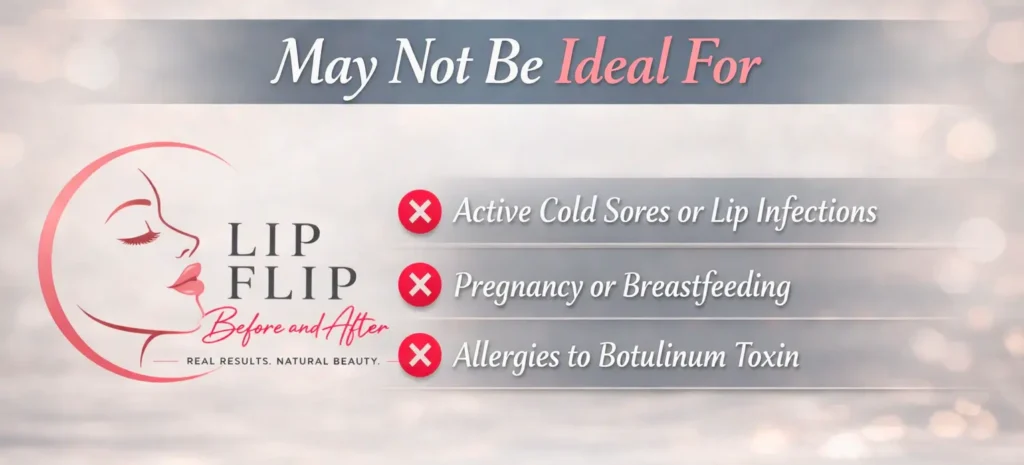
May Not Be Ideal For
- Pregnant or breastfeeding individuals
- Those wanting a significant volume increase
- People with certain neuromuscular conditions
- Those with a known allergy to neuromodulator ingredients
Lip Filler May Be a Better Option For Individuals Who
- Want noticeably fuller, plumper lips
- Have naturally thin lips and want added volume, not just shape change
- Want results that last longer than 12 weeks
- Are comfortable with a slightly longer recovery period involving mild swelling or bruising
A licensed provider should always confirm candidacy based on your health history and goals — this guide is not a substitute for a professional evaluation.
The Lip Flip Procedure: What to Expect
The treatment itself is quick and generally well tolerated. Here’s what a typical appointment looks like:
- Consultation and assessment — your provider evaluates your lip shape, smile, and goals
- Topical numbing (optional) — a numbing cream may be applied a few minutes before injection
- Injections — small amounts of neuromodulator are placed at specific points along the upper lip border
- Brief observation period — most providers have you wait a few minutes before you leave
- Aftercare instructions — you’ll be given guidance on what to avoid over the next 24–48 hours
The entire appointment, including consultation, usually takes about 15–30 minutes, with the injections themselves taking only a few minutes.
Recovery, Aftercare & Healing
Downtime is minimal, but a few simple aftercare steps can help reduce the chance of side effects and support even results.
| Do | Avoid |
| Stay upright for a few hours after treatment | Lying flat immediately after the appointment |
| Apply a cold compress if swelling occurs | Rubbing or massaging the treated area |
| Wait to judge results until day 10–14 | Strenuous exercise for the rest of the day |
| Follow your provider’s specific instructions | Alcohol for 24 hours, as it can increase swelling/bruising risk |
Most people return to normal activities immediately, with no need to take time off work or social plans.
Benefits and Realistic Expectations
A lip flip can offer a subtle, natural-looking enhancement, but it’s important to understand what it can — and can’t — do.
What it may help with:
- A slightly fuller-looking upper lip
- Softening the appearance of a gummy smile
- A quick, low-downtime option to test subtle lip enhancement before committing to filler
What a lip flip will not do:
- It will not significantly increase lip volume the way filler does
- It will not correct lip asymmetry on its own
- It will not produce a permanent change
Setting realistic expectations before treatment is one of the biggest factors in patient satisfaction with this procedure.
Risks, Side Effects & Limitations
Like any injectable treatment, a lip flip carries some risk, even though it’s generally considered low-risk and well tolerated.
| Common (mild, temporary) | Less Common |
| Slight swelling at the injection site | Temporary asymmetry |
| Mild bruising | Difficulty whistling or drinking from a straw |
| Tenderness | Uneven smile for a few days |
| Redness | Allergic reaction (rare) |
When to Contact Your Provider
Reach out to your injector if you notice:
- Significant or worsening asymmetry in your smile
- Ongoing difficulty speaking, drinking, or eating
- Signs of infection, such as increasing redness, warmth, or discharge
- Any symptoms that concern you and don’t improve within a few days
Choosing an experienced, licensed injector is one of the most effective ways to reduce the likelihood of these side effects.
Cost of a Lip Flip
A lip flip typically costs between $75 and $350 per session in the United States, depending on the provider’s experience, your geographic location, and the number of units used. Because it’s considered a cosmetic procedure, it is not covered by insurance.
Pricing may be structured per unit of neuromodulator or as a flat rate for the treatment area — it’s worth asking your provider how they calculate cost so you know exactly what you’re paying for.
Myths vs. Facts About Lip Flips
| Myth | Fact |
| “A lip flip makes lips bigger” | It reshapes the lip rather than adding volume — filler is what increases size |
| “Results are permanent” | Effects typically fade within 6–12 weeks as the muscle regains normal function |
| “It’s the same as Botox for wrinkles” | Same drug class, but used at different injection points for a different goal |
| “There’s no downtime at all” | Minor swelling or bruising is possible for a few days after treatment |
| “Anyone can safely perform it” | Injector training and knowledge of lip anatomy significantly affects results and safety |
Common Mistakes to Avoid
- Choosing price over experience — a lower cost doesn’t always reflect a safer or more skilled provider
- Expecting filler-level volume — a lip flip reshapes; it doesn’t significantly add size
- Judging results too early — the true result isn’t visible until around day 10–14
- Not disclosing your full medical history — including allergies or prior neuromodulator treatments
- Combining treatments too soon — always check with your provider before adding filler or other lip treatments shortly after a flip
How to Choose a Qualified Provider
Because the upper lip area involves precise, small-muscle anatomy, injector experience matters. Before booking, consider asking:
- Are you a licensed medical professional (physician, nurse injector, PA, or NP)?
- How many lip flip procedures have you performed?
- Can I see real before-and-after photos of your own patients, taken at consistent stages of healing?
- What neuromodulator do you use, and why?
- What should I expect if I’m not happy with the results?
A qualified provider will welcome these questions and give clear, non-pressured answers.
Frequently Asked Questions
What is a lip flip?
A lip flip uses a small dose of neuromodulator to relax the upper lip muscle so it rolls slightly outward, creating a fuller-looking lip without added volume.
How long does a lip flip last?
Most people see results for 6–12 weeks before the effect gradually fades.
Does a lip flip hurt?
Most people describe it as a brief pinching sensation. Topical numbing can be used if you’re sensitive to needles.
How is a lip flip different from lip filler?
A lip flip relaxes muscle for subtle reshaping, while filler adds physical volume and lasts significantly longer.
When will I see lip flip results?
Initial changes typically appear around day 3–5, with the full result visible by day 10–14.
Can a lip flip go wrong?
Rare risks include temporary asymmetry or difficulty with movements like whistling or drinking from a straw. Choosing an experienced injector reduces this risk.
Is a lip flip permanent?
No. It’s a temporary treatment, since the neuromodulator wears off naturally over time.
How much does a lip flip cost?
Typically $75–$350 per session, depending on the provider, location, and units used.
Can you combine a lip flip with lip filler?
Yes. Many providers combine both treatments for a fuller, subtly reshaped result, though the combined outcome varies more between individuals.
Who should avoid a lip flip?
Those who are pregnant or breastfeeding, have certain neuromuscular conditions, or are seeking a significant volume increase rather than subtle reshaping should discuss alternatives with a provider.
How long does your lip flip last?
On average, a lip flip lasts around 6–12 weeks. Some people notice the effect starting to fade sooner, closer to the 6-week mark, while others hold onto results closer to 12 weeks — this depends on individual metabolism, muscle strength, and the dose used.
What are the downsides of lip flips?
The main downsides are that results are temporary, the change is subtle rather than dramatic, and there’s a small chance of side effects like temporary asymmetry, mild bruising, or brief difficulty with movements like whistling or drinking from a straw. It also won’t add volume the way filler does, so it may not satisfy someone hoping for a noticeably fuller lip.
How much do lip flips usually cost?
Most lip flips cost between $75 and $350 per session, depending on the provider’s location, experience, and how many units are used. It’s generally much less expensive than lip filler, which often runs $500 or more per syringe.
Does a lip flip actually make a difference?
Yes, but the difference is subtle rather than dramatic. Most people notice their upper lip looks slightly fuller and rolls outward a bit more, especially when smiling. It won’t transform your lips the way filler can, but for people wanting a natural, low-commitment change, the effect is usually noticeable to the person who had it done — even if it’s subtle to others.