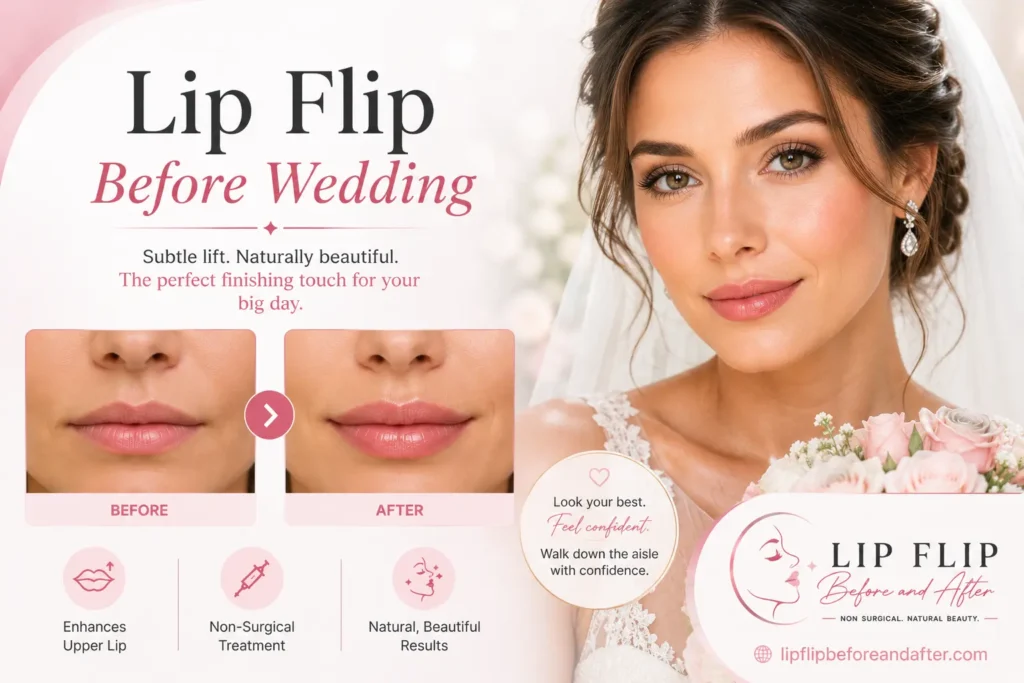
Getting a lip flip before wedding day is one of the most popular last-minute beauty decisions brides make — and one of the easiest to get wrong if the timing is off. A lip flip is quick, subtle, and low-downtime, but swelling, bruising, and uneven results can still show up in photos if it’s scheduled too close to the big day. This guide walks you through exactly when to book a lip flip before your wedding, what to expect during recovery, and how to avoid the common timing mistakes that catch brides off guard.
The safest window for a lip flip before wedding day is 2 to 4 weeks before the ceremony. This gives swelling and bruising time to fully resolve while still letting you see the final results and request a touch-up if needed before your wedding photos are taken.
Table of Contents
Key Takeaways
- A lip flip before wedding day should be scheduled 2–4 weeks out, not the week of.
- Full results typically settle within 10–14 days after treatment.
- Never try a new cosmetic treatment before wedding season without a trial run first.
- A lip flip is not the same as lip filler — the two create very different effects.
- Choose a licensed, experienced injector, especially for a wedding-day timeline.
What Is a Lip Flip, Exactly?
A lip flip is a cosmetic injectable treatment, usually done with Botox, Dysport, or a similar neuromodulator, that relaxes the muscle around the upper lip. This causes the lip to “flip” slightly outward and upward, creating the appearance of a fuller, more defined lip without adding volume the way filler does.
It’s a favorite pre-wedding treatment because it’s subtle, requires no downtime beyond mild swelling, and pairs naturally with makeup and photos. Many brides choose a lip flip before wedding events specifically because it enhances a smile without looking “done.”
How a Lip Flip Works
The treatment involves a handful of small injections placed along the upper lip (and sometimes the lower lip). To understand exactly where the product goes, see this breakdown of lip flip injection sites. The process itself takes about 10–15 minutes, and most people describe it as mildly uncomfortable rather than painful. For more on how the mechanism works, this guide on how a lip flip works covers it in more depth.
Why Brides Choose a Lip Flip Before Their Wedding
- Photos hold up close-up scrutiny. Wedding photography is high-resolution and unforgiving, and a subtly fuller lip photographs well.
- No filler bulk. Brides who want definition without added volume often prefer a lip flip over lip filler.
- Minimal downtime. Compared to more invasive cosmetic treatment before wedding options, a lip flip fits into a busy pre-wedding schedule.
- Smile enhancement. It’s especially popular among brides with a gummy smile who want their smile to look more balanced in photos.
The Ideal Lip Flip Before Wedding Timeline
Timing is the single biggest factor in whether a lip flip before wedding day looks flawless or feels rushed. Here’s a general timeline to plan around:
| Time Before Wedding | What to Do |
| 3–4 months out | Schedule a trial lip flip so you know how you react to it |
| 4–6 weeks out | Book your “real” pre-wedding appointment |
| 2–4 weeks out | Ideal treatment window — full results visible before the big day |
| 1–2 weeks out | Too tight for a first-time lip flip; only suitable for a light touch-up |
| Wedding week | Avoid new injections entirely |
This timeline isn’t just a preference — it reflects how the lip flip recovery timeline actually unfolds, which we’ll cover next.
Lip Flip Recovery: What Happens Day by Day
Understanding recovery is essential to timing a lip flip before wedding day correctly.
- Day 1–2: Mild swelling, possible pinpoint bruising at injection sites.
- Day 3–5: Swelling continues to go down; the “flip” effect starts becoming visible.
- Day 7–10: Most swelling has resolved; results look more natural.
- Day 10–14: Full effect settles in — this is what your final look will actually be.
For a closer look at how results change day by day, see this lip flip results day by day guide. If you want to know more about the general lip flip recovery timeline, it explains what’s normal versus what’s worth calling your provider about.
Featured Snippet Answer: Full lip flip results typically take 10 to 14 days to settle. Most bruising resolves within a week, but scheduling at least two weeks before your wedding ensures the final look is visible before the ceremony.
Lip Flip vs. Lip Filler Before a Wedding
Brides often confuse these two treatments. Here’s how they compare for wedding planning purposes:
| Factor | Lip Flip | Lip Filler |
| What it does | Relaxes the upper lip muscle for a subtle flip | Adds volume with hyaluronic acid |
| Downtime | Mild swelling, 1–2 weeks to settle | More noticeable swelling, 1–2 weeks to settle |
| Best for | Subtle definition, gummy smile correction | Fuller, plumper lips |
| Duration | 6–12 weeks | 6–12 months, depending on product |
| Ideal timing before wedding | 2–4 weeks | 3–4 weeks minimum |
For a full breakdown, this comparison of lip flip vs. lip filler goes into more detail on which one suits different lip shapes and goals.
Cost of a Lip Flip Before a Wedding
Pricing varies by provider, location, and how many units are used. Most lip flips fall within a moderate range compared to filler, since neuromodulators are priced per unit rather than per syringe. For current pricing expectations, see this guide on lip flip cost. Booking early also gives you room in your wedding budget to plan a touch-up if your provider recommends one.
Choosing the Right Provider for a Wedding-Timeline Lip Flip
Because timing matters so much for wedding planning, the provider you choose matters even more. Look for:
- A licensed injector (nurse injector, physician assistant, or physician) with documented experience
- Before-and-after photos of real clients, not just marketing images
- A consultation that discusses your specific lips, not a one-size-fits-all plan
- Clear communication about touch-up policy and timing
Learn more about who should perform a lip flip and what questions to ask before booking.
Common Mistakes Brides Make When Timing a Lip Flip
- Booking too close to the wedding. A lip flip before wedding day scheduled the same week almost always shows visible swelling in photos.
- Skipping the trial run. Everyone’s muscles respond a little differently — a test run months in advance avoids surprises.
- Not budgeting for a touch-up. Some brides need a small adjustment 1–2 weeks after the first session.
- Forgetting the honeymoon. If you’re traveling right after the wedding, plan your session so results are fully settled before you fly.
- Choosing convenience over experience. A rushed, budget provider is the wrong place to save money on a wedding-week treatment.
Tips for a Smooth Lip Flip Before Wedding Experience
- Schedule your appointment on a low-stress day, not during a dress fitting or rehearsal week.
- Avoid alcohol and blood-thinning medication for a few days before your appointment to reduce bruising risk.
- Ask your provider about lip flip aftercare so you know what to avoid in the days after.
- Keep your makeup trial scheduled after your lip flip has settled, so your artist works with your final lip shape.
Wedding-Day Considerations for Photos
Photographers often shoot close-up detail shots of the smile, so a lip flip before wedding day should look completely natural by the time cameras come out. If you’re aiming for a natural lip flip result, communicate that clearly with your injector — subtlety is usually the goal for wedding photography, not dramatic volume.
Frequently Asked Questions
How far in advance should I get a lip flip before my wedding? Two to four weeks before the wedding is ideal. This allows swelling to fully resolve and gives time for a touch-up if needed.
Can I get a lip flip the week of my wedding? It’s not recommended for a first treatment. Swelling and uneven settling can still be visible in close-up photos.
Does a lip flip hurt? Most people describe it as a quick pinch rather than significant pain. A topical numbing cream is often used beforehand.
How long does a lip flip last? Results generally last 6 to 12 weeks, so timing matters if you want your lips to look their best specifically on the wedding day.
Will a lip flip look natural in photos? Yes, when done conservatively by an experienced injector, a lip flip typically photographs as a subtle, natural enhancement rather than an obvious change.
Is a lip flip better than filler for a wedding? It depends on your goal. A lip flip enhances shape and slight fullness without added volume, while filler is better if you want visibly plumper lips.
Can I combine a lip flip with other wedding treatments? Many brides do combine a light cosmetic treatment before wedding season, but it’s best to space out different treatments and discuss timing with your provider.
What if I bruise easily? Avoid alcohol, aspirin, and fish oil supplements for a few days beforehand, and schedule extra buffer time before the wedding.
Do I need a touch-up before the wedding? Some brides do. Ask your provider about their touch-up policy when you book your initial appointment.
Can men get a lip flip before a wedding too? Yes — grooms sometimes request subtle treatments as well, though it’s less common than for brides.
Is a lip flip safe? When performed by a licensed, experienced injector, a lip flip is considered a low-risk cosmetic procedure. As with any injectable treatment, discuss your medical history and any concerns during your consultation.
Summary
A lip flip before wedding day can be a simple, subtle way to enhance your smile for photos — as long as the timing is right. Booking 2 to 4 weeks out gives swelling time to resolve and leaves room for a touch-up if you need one. Do a trial run months in advance, choose an experienced injector, and avoid scheduling anything new the week of the ceremony. With the right timeline, a lip flip before wedding photos can look completely natural and camera-ready.
This article is for general informational purposes and is not a substitute for professional medical advice. Always consult a licensed, qualified injector to discuss your individual goals, medical history, and treatment timeline.