Blue shampoo is a toning shampoo with blue pigments that neutralise unwanted orange and red (brassy) tones in brown, dark blonde and lightened dark hair. It works on simple colour-wheel logic: blue sits opposite orange, so a little blue pigment cancels the warmth and makes brown hair look cooler and richer. Purple shampoo does the same job for yellow tones in blonde, grey and silver hair. Used once a week or so, blue shampoo can stretch the time between salon toners.
Blue Shampoo vs Purple Shampoo
| Blue shampoo | Purple shampoo | |
| Cancels | Orange and red-copper tones | Yellow tones |
| Best for | Brunettes, dark blonde, brown balayage or highlights, lightened dark hair | Blonde, platinum, silver, grey hair |
| Result | Cooler, richer brown; less brassy | Brighter, cooler blonde |
| Over-use risk | Dull or slightly blue-ish tint | Lilac or ashy tint |
Quick test: look at your hair in daylight. If the warmth looks orange or copper, choose blue. If it looks yellow or straw-like, choose purple. Many people with brown balayage use both: blue for the darker orange areas and purple for very light yellow pieces.
Why Does Brown Hair Turn Brassy?
Dark hair contains a lot of warm (red and orange) pigment underneath. When it is lightened or coloured, cool toner fades first, so the warm undertones show through. Sun, hard water with minerals, chlorine, heat styling and harsh shampoos speed this up.
How to Use Blue Shampoo in 7 Steps
- Wet your hair fully: never apply to dry hair, which soaks up too much pigment unevenly.
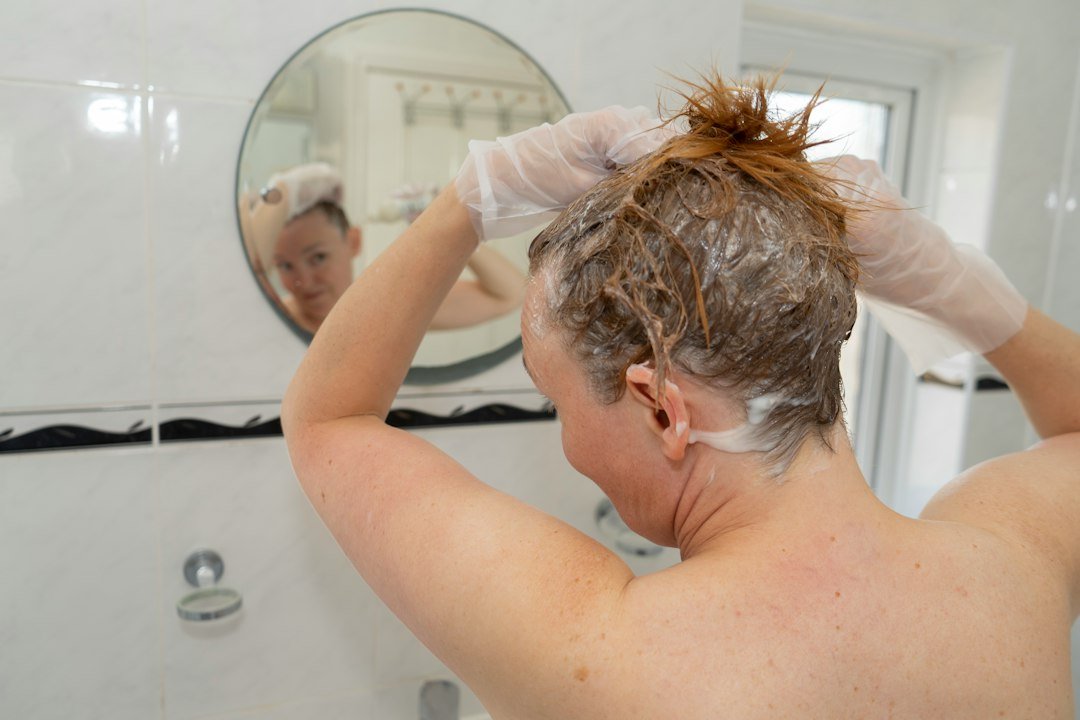
- Wear gloves if you have light nail polish or want to avoid stained hands.
- Apply evenly from roots to ends, focusing on the brassiest areas.
- Leave it on 2 to 5 minutes the first time; up to 5 to 10 minutes only if your hair is very brassy and the label allows.
- Rinse with cool water until it runs clear.
- Condition: toning shampoos can be drying, so follow with a colour-safe conditioner or mask.
- Check in daylight and adjust timing next wash.
How Often to Use Blue Shampoo
| Your hair | Frequency |
| Slightly warm brunette | Every 1 to 2 weeks |
| Brown balayage or highlights turning orange | Once a week |
| Very brassy, recently lightened hair | Up to twice a week at first, then weekly |
| Natural, uncoloured brown | Rarely needed |
On other wash days, use a gentle, sulfate-free, colour-safe shampoo.
Common Blue Shampoo Mistakes
- Using it every wash: leads to dull, flat or blue-tinged hair.
- Leaving it too long on porous ends: bleached ends grab pigment fastest; apply there last.
- Using blue on yellow blonde: it will not neutralise yellow; use purple.
- Expecting it to lighten hair: toning shampoo changes tone, not lightness.
- Skipping conditioner: hair can feel dry afterwards.
How to Fix Hair That Turned Blue
Do not panic; the tint is temporary. Wash once or twice with a clarifying shampoo, use warm (not hot) water, and skip toning products for a week or two. A dab of vitamin C (crushed tablets mixed with shampoo) is a common home trick, but it can be drying, so follow with a mask.
Blue Shampoo vs Salon Toner
A salon toner (gloss) deposits a stronger, more precise colour and lasts several weeks. Blue shampoo is a gentler maintenance step between appointments. If your hair is very orange after lightening, a professional toner or colour correction will work better than shampoo alone.
Blue Shampoo FAQs
Does blue shampoo work on black hair?
On natural black hair you will see little difference. It helps more if black hair has been lightened and turned reddish or orange.
Can I use blue shampoo on dry hair?
It is not recommended. Dry hair absorbs pigment unevenly and can turn patchy.
Does blue shampoo damage hair?
No, but some formulas are drying. Always condition afterwards.
Can men use blue shampoo?
Yes. It works the same way on any brassy brown or dark blonde hair, including beards that have been lightened.
Find more hair care guides on our blog.
Sources: Davines: Blue vs purple shampoo; John Frieda: Blue vs purple shampoo; Verb: Blue vs purple shampoo.