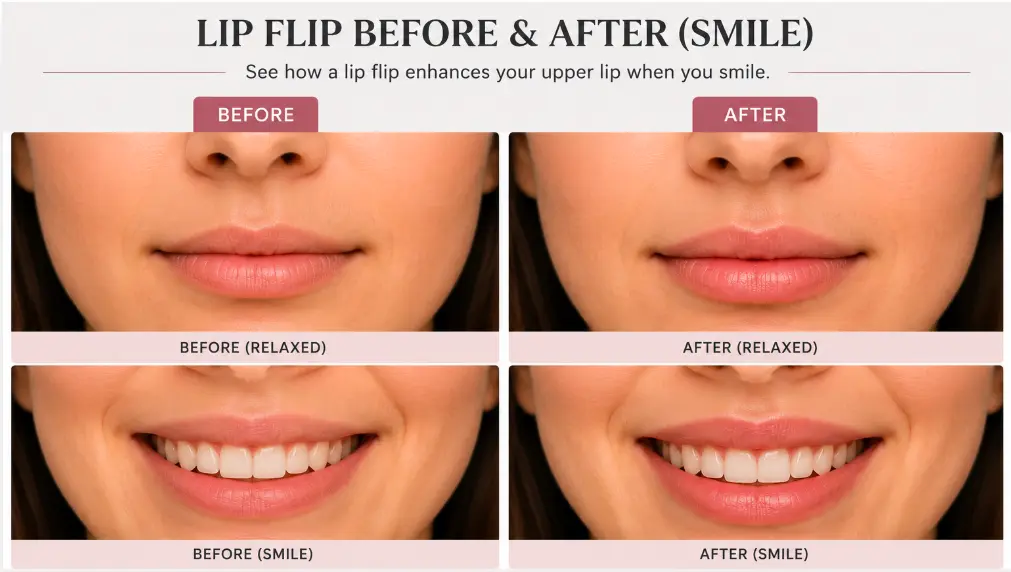
A lip flip before and after smile comparison tells you far more than a resting photo ever could, because this treatment is designed to change how your lips behave in motion, not how they look sitting still. If you’ve been searching for what to expect, you’ve probably noticed that results vary a lot depending on your specific smile type, whether that’s a gummy smile, a thin upper lip that vanishes, or a slightly uneven smile. This guide walks through exactly how a lip flip affects different smile patterns, what a realistic timeline looks like, and how to read before and after photos without being misled by expression, lighting, or healing stage.
Table of Contents
Quick Answer: How Does a Lip Flip Change Your Smile?
A lip flip relaxes the muscle around the upper lip so it rolls outward instead of curling inward during a smile. This typically means less visible gum, a fuller-looking upper lip while smiling, and a smile that no longer “disappears” the lip. At rest, the change is much more subtle.
Key Takeaways
- A lip flip before and after smile transformation is usually most visible during movement, not at rest.
- The treatment works especially well for gummy smiles, thin upper lips, and lips that curl under when smiling.
- Full smile results typically appear by day 10 to 14 and last around 8 to 12 weeks.
- Dosage generally ranges from 4 to 12 units of Botox, depending on how much correction the smile needs.
- Combining a lip flip with filler is common when patients want both a smile change and added volume at rest.
- Reviewing multiple smiling photos, not just one, gives the most honest picture of what to expect.
What Is a Lip Flip? A Quick Refresher
A lip flip is a non-surgical treatment using a small dose of Botox, Dysport, or a similar neuromodulator, injected into the orbicularis oris, the muscle that circles the mouth. Relaxing this muscle allows the upper lip to roll outward during movement instead of pulling inward. No volume is added; the fuller appearance comes purely from how the muscle behaves when you smile, talk, or laugh.
This is why a lip flip before and after smile photo often looks far more dramatic than a resting photo of the same patient.
Why Your Smile Type Matters for Results
Not every upper lip behaves the same way while smiling, and this is a gap most before-and-after galleries never explain. Your specific smile pattern determines how noticeable your results will be.
Gummy Smile
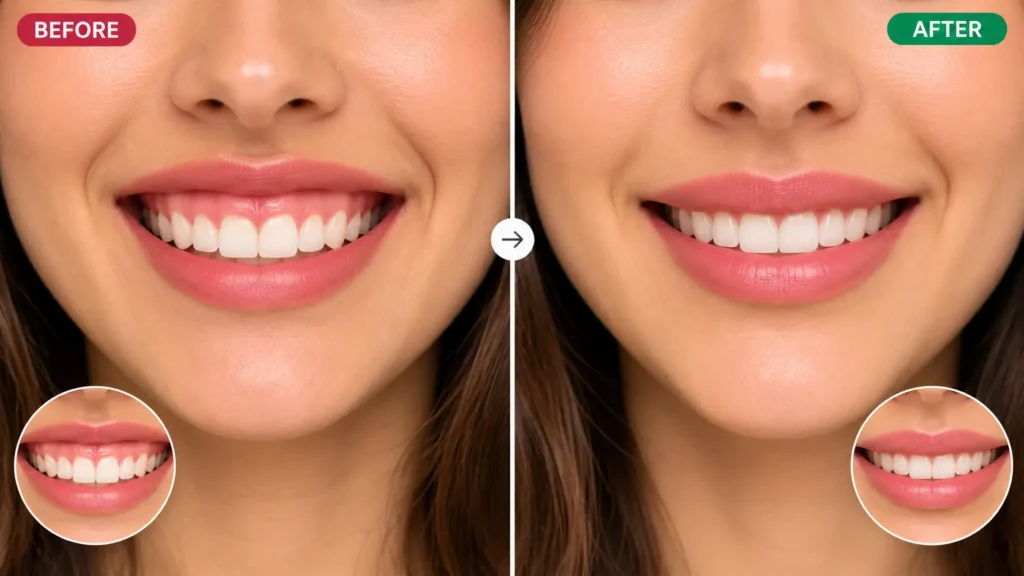
If your upper lip rises higher than usual when smiling, showing more gum tissue than you’d like, a lip flip is one of the more targeted non-surgical options. By relaxing the muscle responsible for that upward pull, it can reduce visible gum during a smile. Providers often use a slightly higher dose, commonly in the range of 8 to 12 units, for more pronounced gummy smile correction, compared to a standard lip flip.
Thin Upper Lip That Disappears When Smiling
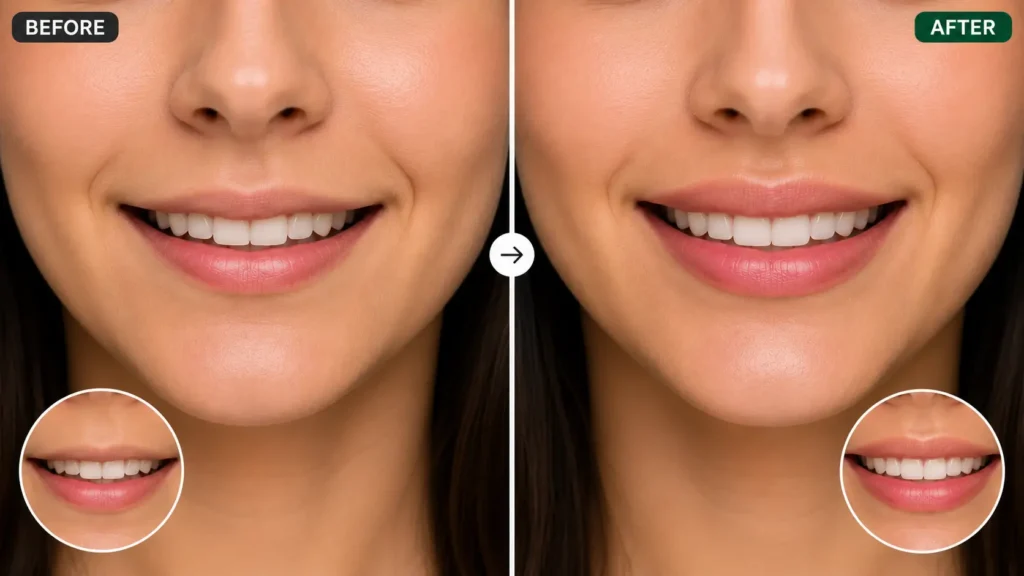
Some people have an upper lip that looks fine at rest but seems to vanish, thin out, or roll inward the moment they smile. A lip flip directly addresses this pattern, since it prevents the muscle from pulling the lip under during movement.
Uneven or Asymmetric Smile
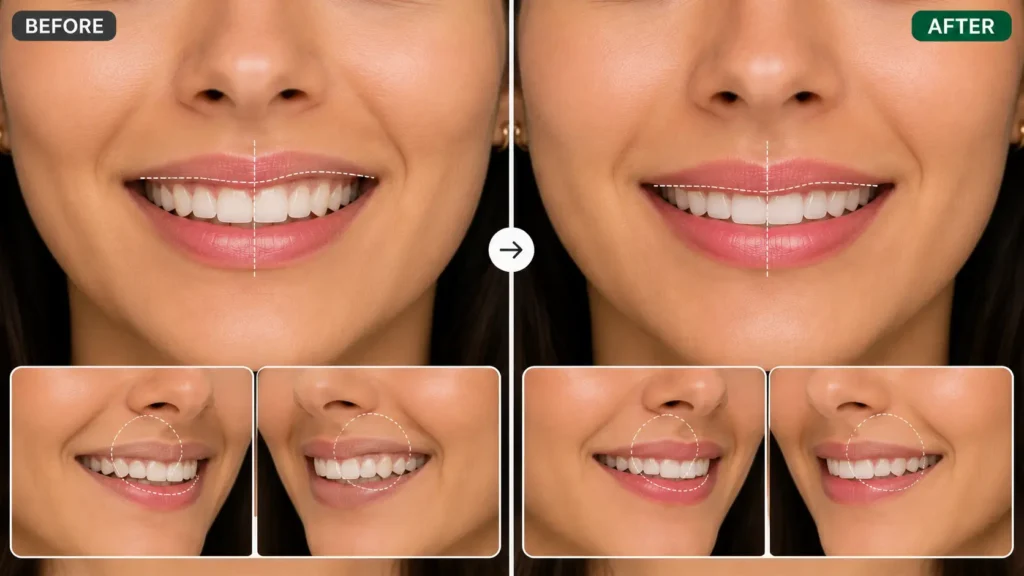
If one side of your smile pulls higher or thinner than the other, a skilled injector can use slightly different dosing on each side to help even out the movement. This requires more precision than a standard, symmetrical lip flip.
Naturally Full Lips With Minimal Movement Change
If your upper lip already stays fairly full and visible during a smile, a lip flip will likely produce only a subtle change. This group tends to be less satisfied with results, since there’s less room for visible improvement.
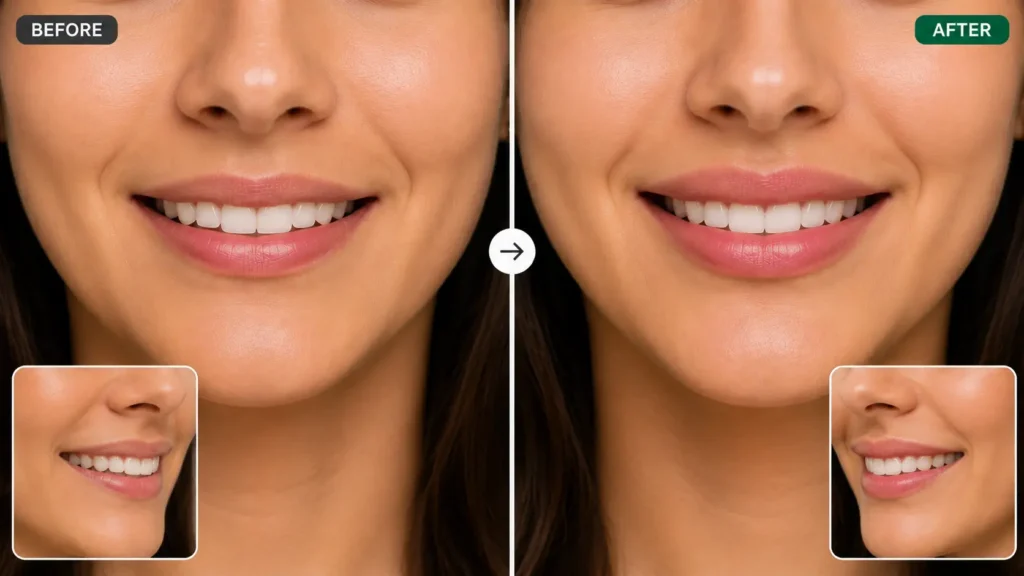
Smiling vs. Not Smiling: A Side-by-Side Look
| Expression | What Changes | Why |
| Not smiling (resting) | Slightly fuller-looking upper lip | Muscle is relaxed either way, so contrast is minor |
| Smiling | Most noticeable change | Muscle would normally pull lip inward or upward; the flip prevents this |
| Talking or laughing | Similar to smiling | Same muscle activity involved |
A trustworthy before and after gallery should show both a resting shot and a full smile, so you can judge the true range of results rather than one flattering angle.
Lip Flip Before and After Smile Timeline
| Stage | What to Expect |
| Day 0–2 | Little to no visible change; possible minor swelling |
| Day 3–7 | Lip begins rolling outward, especially while smiling |
| Day 10–14 | Full smile results visible; ideal time for accurate “after” photos |
| Week 6–8 | Results stable and settled |
| Month 3–4 | Smile pattern gradually returns to baseline as the muscle regains movement |
Judging your results before day 10 can be misleading, since smile-specific changes take the longest to fully develop.
Lip Flip vs. Lip Filler: Which Changes Your Smile More?
| Feature | Lip Flip | Lip Filler |
| Mechanism | Relaxes lip muscle | Adds physical volume |
| Effect while smiling | Prevents lip from thinning or curling inward | Lip stays visibly full through any expression |
| Effect at rest | Subtle fullness | Noticeably plumper at rest too |
| Best for | Gummy smile, lip that vanishes when smiling | Overall lip size and shape at any expression |
| Duration | 8–12 weeks | 6–18 months |
| Cost | Lower per treatment | Higher upfront cost |
If your main concern is specifically how your smile looks, a lip flip is often the more direct solution. If you want fuller-looking lips in every expression, filler tends to deliver a more consistent result.
Step-by-Step: What Happens During a Lip Flip Appointment
- Consultation: The injector studies your smile pattern, resting lip position, and gum visibility to plan placement.
- Cleansing: The upper lip area is cleaned before injection.
- Marking: Injection points are marked along the upper lip border, typically 4 to 6 spots for a standard flip, more for gummy smile correction.
- Injection: A fine needle delivers small units of neurotoxin into the muscle, usually taking 5 to 10 minutes.
- Aftercare guidance: You’re advised on what to avoid over the next 24 to 48 hours.
- Follow-up: Many providers check in around 2 weeks to review your smile results and adjust future treatments if needed.
Aftercare Tips to Protect Your Smile Results
- Avoid rubbing or applying pressure to the lips for several hours after treatment.
- Skip strenuous exercise for the rest of the day to reduce swelling risk.
- Avoid alcohol for 24 hours to lower bruising risk.
- Wait the full 10 to 14 days before judging your final smiling results.
- Practice smiling naturally in the mirror around day 7 to 10 to track how the change is developing.
Common Mistakes When Judging Lip Flip Smile Results
- Only looking at resting photos, missing the bigger change visible during a smile.
- Comparing your day 3 photo to someone else’s day 14 photo, which sets unrealistic expectations.
- Expecting a gummy smile to fully disappear. Improvement is common, but the degree varies by anatomy and dosage.
- Choosing a provider based on one dramatic “after” smile photo instead of reviewing a full gallery.
- Skipping the consultation and assuming every smile type responds the same way to a standard dose.
Lip Flip Cost Overview
| Factor | Typical Range |
| Standard lip flip | $100–$250 |
| Lip flip with gummy smile correction | $200–$400 |
| Units typically used | 4–12 units, depending on smile type |
| Duration of results | 8–12 weeks |
Pricing depends on provider experience, geographic location, and how much correction your specific smile needs.
Who Sees the Best Smile Results?
Good candidates typically have:
- A gummy smile with more visible gum tissue than desired
- An upper lip that thins or curls under specifically while smiling
- Realistic expectations that the biggest change happens during movement
- No underlying dental or bite issues that would limit results
A lip flip may not meaningfully change your smile if you:
- Already have full, visible lips through every expression
- Have a gummy smile caused primarily by bone structure or tooth position rather than muscle activity, which may respond better to dental or surgical options
- Play a wind instrument or need precise lip control for work
- Are pregnant or breastfeeding, since neuromodulators are generally not recommended during this time
A licensed injector, ideally with specific experience treating gummy smiles, should assess your smile pattern before treatment. This article is for general information and isn’t a substitute for a professional consultation. Organizations like the American Academy of Facial Esthetics and dermatology and dentistry associations offer additional patient education on neuromodulator use around the mouth.
Pros and Cons
Pros:
- Directly targets what changes during smiling, talking, and laughing
- Can meaningfully reduce gum show for muscle-driven gummy smiles
- No added lip volume or overfilled look at rest
- Fully reversible as effects wear off naturally
Cons:
- Resting change is subtle and easy to overlook
- Not effective for gummy smiles caused by bone or tooth structure
- Results are temporary and require repeat treatment
- Possible temporary difficulty with certain lip movements immediately after treatment
Frequently Asked Questions
Will a lip flip completely fix my gummy smile? It can meaningfully reduce visible gum for smiles driven by muscle activity, but results vary based on your specific anatomy, and severe cases may need a dental or surgical evaluation.
How long after treatment will my smile look different? Most people see noticeable smile changes within 3 to 7 days, with the full result visible by day 10 to 14.
Do all smile types respond the same way to a lip flip? No. Gummy smiles, thin upper lips, and naturally full lips all respond differently, which is why a consultation matters more than a standard, one-size-fits-all dose.
Can I combine a lip flip with fillers for a bigger smile change? Yes, some providers combine both so the lips look fuller while smiling and at rest. This should be discussed during a consultation.
Why do my before and after photos look different depending on how I’m smiling? A slight smile, a full smile, and a laugh all engage the lip muscle differently, so the visible change can look bigger or smaller depending on the expression captured.
How many units of Botox are used for smile-focused lip flip results? Standard lip flips often use 4 to 6 units, while gummy smile correction may use closer to 8 to 12 units, depending on severity.
Is treating a gummy smile with a lip flip painful? Discomfort is generally minimal and brief, and many providers use a topical numbing cream to improve comfort.
Will my smile look frozen or unnatural afterward? When dosed correctly, a lip flip shouldn’t restrict natural smile movement. A stiff or frozen-looking smile is usually a sign of overdosing.
How soon can I repeat treatment once smile results fade? Most people can safely repeat treatment once effects wear off, typically every 2 to 3 months, though this should be confirmed with your provider.
Can lip flip results be uneven between the two sides of my smile? Temporary asymmetry can occur, particularly with uneven muscle response, and usually resolves as the treatment wears off. An experienced injector reduces this risk.
Does a lip flip affect my ability to talk or eat normally? Most patients notice no meaningful change to speech or eating, though some report minor, temporary differences with certain sounds or drinking through a straw.
Is a lip flip a good option for a smile makeover before an event? Since full results take about two weeks to appear, it’s best scheduled at least three weeks before any event to allow time for adjustments if needed.
Summary: Reading Your Lip Flip Before and After Smile Results
A lip flip before and after smile comparison is most meaningful when you understand your specific smile type, whether that’s a gummy smile, a thin lip that vanishes, or an uneven pattern, and when you compare photos taken at the same healing stage and expression. The biggest changes almost always show up in motion, not at rest, so ask any provider to share both smiling and resting examples before you book.
For more detail on evaluating photos, understanding timelines, and comparing your options, visit our full lip flip before and after guide. If you’re unsure whether a lip flip fits your smile goals, a consultation with a qualified, licensed injector is the best next step.