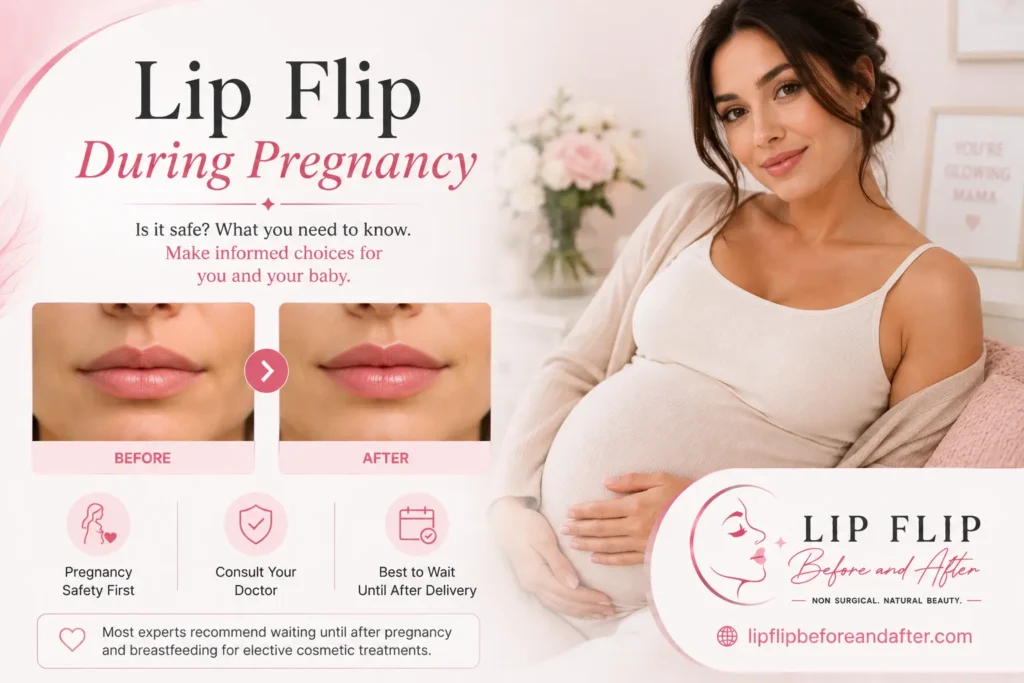
If you’ve been getting lip flips regularly and just found out you’re pregnant, or you’re simply curious whether it’s an option during pregnancy, you’re not alone in asking. A lip flip during pregnancy is a question that comes up often, and the honest answer is more conservative than many patients expect.
A lip flip uses a neuromodulator, most commonly Botox, injected into the muscle around the upper lip. Because these products haven’t been studied specifically in pregnant women for safety, the overwhelming standard of care across the cosmetic and medical field is to avoid neuromodulator injections, including lip flips, during pregnancy and breastfeeding.
This guide explains why that guidance exists, what the current medical consensus says, what to expect if you pause treatment, and how to plan your next lip flip once it’s appropriate to resume.
No reputable provider will perform a lip flip during pregnancy. Botox and other neuromodulators haven’t been adequately studied in pregnant women, and the current medical guidance is to avoid these treatments during pregnancy and breastfeeding as a precaution, even though no direct evidence of harm has been established either way.
Table of Contents
Key Takeaways
- Neuromodulators used in a lip flip, including Botox, Dysport, Xeomin, and Jeuveau, aren’t approved or well-studied for use during pregnancy.
- Reputable providers will decline to perform a lip flip on pregnant patients as standard practice.
- This guidance is precautionary, based on limited safety data rather than confirmed evidence of harm.
- The same caution generally applies during breastfeeding.
- Pausing treatment during pregnancy is temporary and doesn’t cause any lasting effect on future results.
- Discussing timing with both your OB-GYN and your injector is the safest way to plan your return to treatment.
Why Providers Avoid Lip Flips During Pregnancy
A lip flip relies on a neuromodulator to relax the upper lip muscle. These products work by blocking nerve signals to muscles, and while they’re generally considered safe for non-pregnant adults when administered by a qualified provider, pregnant and breastfeeding women have historically been excluded from clinical trials for ethical reasons. For background on how the treatment works generally, see how does a lip flip work.
This means there simply isn’t robust safety data confirming these products are risk-free during pregnancy, not that they’ve been proven harmful. Medical and cosmetic professional guidance takes a precautionary approach in situations like this, recommending avoidance until more evidence exists, which is standard practice for many elective treatments and medications during pregnancy.
What the Current Guidance Says
Manufacturer labeling for neuromodulators like Botox typically classifies use during pregnancy as not recommended due to insufficient data, and reputable medical spas and injectors follow this guidance as standard practice. Elective cosmetic procedures involving injectables are generally paused during pregnancy across the industry, not just for lip flips specifically.
This isn’t unique to lip flips. Many elective cosmetic treatments, medications, and even some skincare ingredients are similarly avoided during pregnancy out of caution, even without confirmed evidence of risk, simply because the research hasn’t been done to rule it out.
Should You Disclose Pregnancy Before a Lip Flip Appointment?
Yes, always disclose pregnancy, or the possibility of pregnancy, to your provider before any injectable treatment. A responsible provider will ask about pregnancy status as part of standard intake and will decline treatment if you’re pregnant or trying to conceive, regardless of how far along you are or how routine your previous lip flips have been.
What If You Got a Lip Flip Before Knowing You Were Pregnant?
This is a common and understandable concern. If you received a lip flip shortly before finding out you were pregnant, the most important step is to contact your OB-GYN and share the timing and details of the treatment so they can advise you directly based on your specific situation. This article can’t provide medical guidance for that scenario; only a qualified healthcare provider familiar with your pregnancy can do that appropriately.
Lip Flip Pregnancy Timeline: Before, During, and After
| Stage | Recommended Approach |
| Trying to conceive | Many providers recommend pausing treatment during active attempts to conceive; discuss timing with your provider |
| Pregnancy (all trimesters) | Elective lip flip treatment is not performed |
| Breastfeeding | Generally also avoided as a precaution, pending further guidance from your provider |
| After breastfeeding ends | Treatment can typically resume once cleared by your provider |
Specific timing recommendations can vary, so this table is general guidance, not a substitute for a direct conversation with your OB-GYN and injector.
What Happens to Your Lips If You Pause Treatment?
Nothing permanent. A lip flip’s effect naturally fades over 8–12 weeks regardless of whether you get a touch-up, so pausing simply means your upper lip muscle gradually returns to its natural resting state during pregnancy. There’s no rebound effect or lasting change from taking a break; when you’re ready to resume, your provider can start fresh as if from any other gap in treatment. For more on how fading works, see why did my lip flip wear off quickly and lip flip maintenance schedule for resuming a routine afterward.
Alternatives to Consider During Pregnancy
If you’re missing the subtle enhancement a lip flip provided, a few non-injectable options are generally considered lower-risk during pregnancy, though you should still confirm anything new with your OB-GYN first:
- Lip-plumping glosses — temporary cosmetic products that create a fuller appearance without injections.
- Lip liner and makeup techniques — can visually enhance lip shape without any treatment.
- Hydration-focused lip care — well-moisturized lips can look fuller and healthier simply through consistent care.
These aren’t substitutes for a lip flip’s specific mechanism, but they can help in the interim.
Step-by-Step: Planning Your Return to Lip Flip Treatment After Pregnancy
- Get clearance from your OB-GYN, especially if you’re breastfeeding, before resuming any elective injectable treatment.
- Book a fresh consultation with your injector rather than assuming your previous dosage still applies after a long gap. See lip flip consultation.
- Disclose your full timeline, including how recently you gave birth or stopped breastfeeding.
- Discuss whether your goals or lip anatomy have changed, since pregnancy-related changes in skin and tissue are common and worth mentioning.
- Restart your maintenance schedule once you’ve resumed treatment and confirmed your new baseline results.
Pros and Cons of Waiting to Resume Treatment
Pros
- Aligns with standard precautionary medical guidance.
- No lasting negative effect on future lip flip results from pausing.
- Time to reassess goals and try alternative, lower-commitment options in the meantime.
Cons
- Requires patience if you were used to a regular lip flip routine.
- May mean the “flip” effect isn’t present for an important event during this period.
- Some adjustment needed when resuming, since your provider will likely want a fresh assessment.
Common Mistakes to Avoid
- Not disclosing pregnancy or the possibility of pregnancy to your provider before treatment.
- Assuming a “small” or “touch-up” dose is somehow exempt from standard pregnancy guidance.
- Trying to self-administer any product to work around a provider’s refusal.
- Skipping a conversation with your OB-GYN if you received treatment before learning you were pregnant.
- Assuming pausing treatment will negatively affect your results once you resume; it won’t.
Frequently Asked Questions Lip Flip During Pregnancy
Can I get a lip flip in my third trimester if I’m almost done being pregnant? No, standard guidance applies throughout all trimesters of pregnancy, not just early on, since the precaution is based on lack of safety data at any stage.
Is it safe to get a lip flip while trying to conceive? Many providers recommend pausing elective neuromodulator treatments while actively trying to conceive; discuss specific timing with your provider and OB-GYN.
How long after giving birth can I get a lip flip? This depends on whether you’re breastfeeding and your individual recovery; your OB-GYN and injector can advise on appropriate timing for your specific situation.
Will a lip flip harm my baby if I didn’t know I was pregnant when I got it? This is a question only your OB-GYN can appropriately answer based on your specific timing and circumstances; contact them directly rather than searching for a general answer.
Are all cosmetic injectables treated the same way during pregnancy? Most elective injectables, including neuromodulators and dermal fillers, are generally avoided during pregnancy as a precaution, following similar reasoning around limited safety data.
Can I use lip plumping products instead of a lip flip while pregnant? Topical lip plumpers are generally considered lower-risk than injectables, but you should still check any new product with your OB-GYN, especially regarding specific ingredients.
Will pausing my lip flip routine during pregnancy affect how long results last once I resume? No, there’s no evidence that a treatment gap affects how your body responds to future lip flip treatments.
Do reputable providers require a pregnancy test before treatment? Practices vary, but responsible providers will always ask directly about pregnancy status and pregnancy plans as part of standard intake, regardless of whether formal testing is required.
Is breastfeeding treated the same as pregnancy for lip flip guidance? Yes, most providers extend the same precautionary approach to breastfeeding, since safety data during lactation is similarly limited.
Can I get a lip flip if I’m not pregnant but I’m undergoing fertility treatment? This is worth discussing directly with both your fertility specialist and your injector, since individual circumstances and treatment timelines vary.
Should I tell my injector if I’m unsure whether I might be pregnant? Yes, always disclose any uncertainty. A responsible provider will pause treatment or ask you to confirm before proceeding if there’s any possibility of pregnancy.
Summary
The safest, most widely followed approach is to avoid a lip flip during pregnancy and breastfeeding, based on precautionary guidance rather than confirmed evidence of harm. Reputable providers will decline treatment during this time as standard practice, and pausing has no lasting effect on your results once you’re cleared to resume. If you have specific concerns, especially about treatment received before learning you were pregnant, your OB-GYN is the right person to speak with directly rather than relying on general information alone.
This article is intended for general educational purposes and is not a substitute for personalized medical advice. Always consult your OB-GYN or another qualified healthcare provider regarding any cosmetic treatment during pregnancy or breastfeeding.