
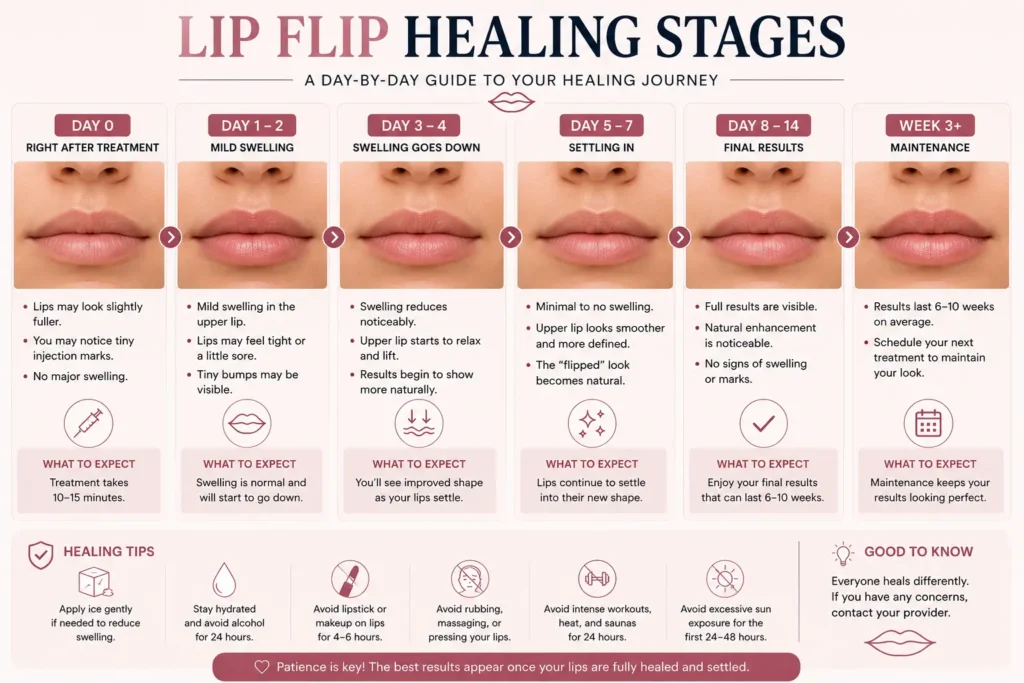
Right after your appointment, your lips might feel tight, tingly, or slightly swollen, and it’s natural to wonder if that’s normal. Understanding the lip flip healing stages ahead of time takes the guesswork out of recovery, so you know exactly what to expect and when.
Unlike surgery, a lip flip has a short and gentle healing process. Most people move through the healing stages within one to two weeks, with mild symptoms that fade quickly. Still, knowing the timeline helps you avoid unnecessary worry and spot the rare cases that need a follow-up call.
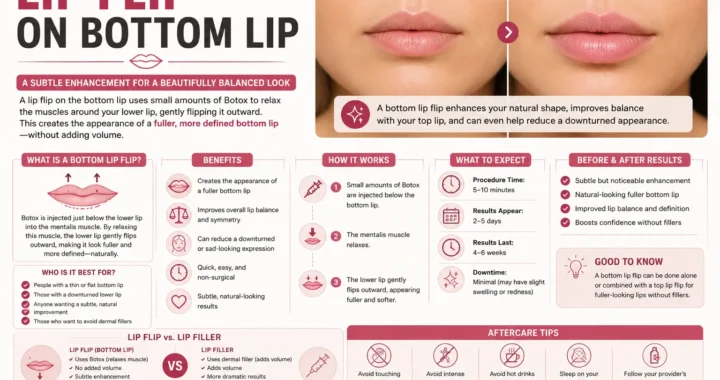
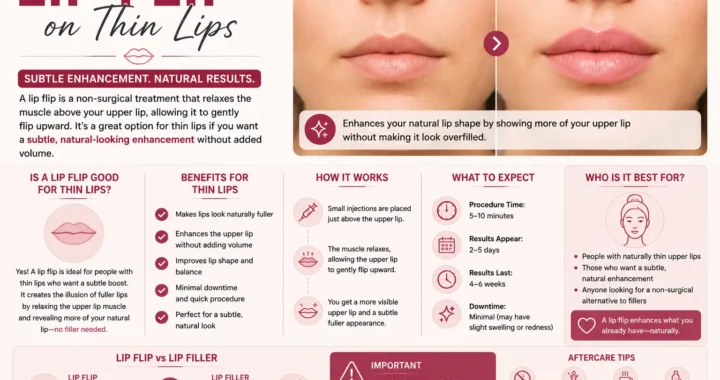
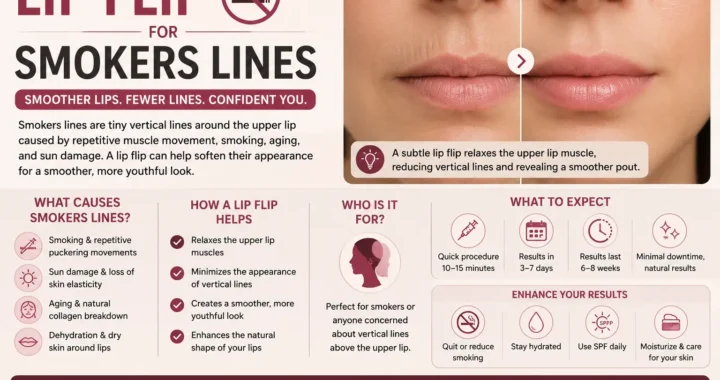
This guide walks through every stage of lip flip healing, from the moment you leave your appointment to full results. You’ll also find tips to support recovery, common mistakes to avoid, and answers to the questions people ask most. For visual context, you can browse real lip flip before and after photos as you read.
Table of Contents
Quick Answer: What Are the Lip Flip Healing Stages?
The lip flip healing process moves through four general stages: immediate reaction (day 0–1), swelling and settling (day 2–5), muscle relaxation and visible change (day 6–10), and full results with complete healing (day 10–14). Most side effects, like swelling or tightness, resolve well before the two-week mark.
Key Takeaways
- Lip flip healing typically takes 7 to 14 days from start to finish.
- Mild swelling, redness, or small bumps are normal in the first 24 to 48 hours.
- Some patients notice temporary speech or drinking difficulty during the first week.
- Final results and complete healing usually align around day 10 to 14.
- Most side effects are mild and short-lived when performed by a qualified injector.
The 4 Lip Flip Healing Stages Explained
Stage 1: Immediate Reaction (Day 0–1)
Right after your injections, it’s common to see small red bumps at each injection site, similar to mosquito bites. Mild swelling and slight redness are typical too. Some patients also feel a bit of numbness if a topical anesthetic was used.
What’s normal:
- Small raised bumps that flatten within an hour
- Mild swelling around the upper lip
- Slight tenderness at injection points
- A little bruising, especially near the corners of the mouth
What to do: Avoid touching or massaging the treated area. Applying a cold compress gently, without pressure, can help reduce swelling. To understand exactly where these injections are placed, see this guide on lip flip injection sites.
Stage 2: Swelling and Settling (Day 2–5)
This stage is about your body adjusting to the injections while the Botox begins binding to nerve endings. Visible shape change hasn’t started yet, but the healing process is well underway.
What’s normal:
- Swelling gradually decreasing
- Any bruising shifting color (a normal part of bruise healing)
- Lips feeling slightly heavy or tight
- Minor difficulty with precise lip movements, like whistling or sipping from a straw
Most patients feel back to normal day-to-day comfort by day 4 or 5, even though visible results are still developing. If you’re curious how the two timelines relate, this breakdown of how long a lip flip takes to work explains the visible-results side of the process in more detail.
Stage 3: Muscle Relaxation and Visible Change (Day 6–10)
By now, the Botox has taken hold of the orbicularis oris muscle, and the upper lip starts to roll outward and upward. Swelling should be fully resolved for most people at this stage, revealing the actual shape change underneath.
What’s normal:
- Noticeably fuller-looking upper lip, especially when smiling
- Less gum visibility for those addressing a gummy smile
- Speech and eating feeling close to normal
- Any lingering bruising fading completely
This is often the most satisfying stage, since patients can finally see what their results will look like. Comparing your own healing to lip flip results day by day photos can help set realistic expectations for this point in the timeline.
Stage 4: Full Results and Complete Healing (Day 10–14)
The final healing stage marks the point where the Botox has reached full effect and all physical symptoms have resolved. This is the appropriate time to evaluate your results and decide if a touch-up is needed.
What’s normal:
- No remaining swelling, bruising, or tenderness
- Full range of motion in the lips
- Final, settled shape and fullness
If your results still look uneven or minimal at this stage, it’s worth checking in with your provider rather than waiting longer.
Lip Flip Healing Stages at a Glance
| Stage | Timeframe | What You’ll Notice |
| Immediate Reaction | Day 0–1 | Small bumps, mild swelling, possible bruising |
| Swelling & Settling | Day 2–5 | Swelling reduces, tightness, minor movement changes |
| Visible Change | Day 6–10 | Lip flip effect becomes visible, symptoms fade |
| Full Healing | Day 10–14 | Complete healing, final results settled |
Common Symptoms During Healing (And When They’re Normal)
| Symptom | Normal Duration | When to Worry |
| Swelling | 1–5 days | Lasts beyond 7 days or worsens |
| Bruising | 3–10 days | Spreads significantly or doesn’t fade |
| Numbness | A few hours to 1 day | Persists beyond several days |
| Speech difficulty | 3–7 days | Severe or lasts beyond 2 weeks |
| Difficulty drinking from a straw | 3–7 days | No improvement after 10 days |
| Redness | A few hours to 2 days | Accompanied by warmth, pus, or spreading heat |
Research on botulinum toxin injections for the lips generally supports what providers see in practice: side effects tend to be mild and temporary when the procedure is performed by a trained, licensed injector.
Lip Flip Healing vs. Lip Filler Healing
People often confuse these two recovery processes since both involve the lips. Here’s how they actually differ.
| Feature | Lip Flip Healing | Lip Filler Healing |
| Swelling level | Mild | Moderate to significant |
| Bruising risk | Low to moderate | Moderate to high |
| Numbness | Minimal, brief | More noticeable, from lidocaine in filler |
| Full healing time | 10–14 days | 7–14 days |
| Downtime | Little to none | Occasionally 1–2 days of visible swelling |
Since a lip flip doesn’t add physical volume the way filler does, there’s less tissue trauma involved, which usually means a smoother healing experience overall. You can compare expected outcomes further in this guide to lip flip results.
Step-by-Step Aftercare to Support Healing
- Avoid touching or rubbing your lips for at least 24 hours to prevent the Botox from spreading to unintended muscles.
- Skip strenuous exercise on the day of treatment, since increased blood flow can worsen swelling and bruising.
- Avoid alcohol for 24 hours before and after your appointment to reduce bruising risk.
- Stay upright for a few hours after your appointment rather than lying flat.
- Sleep on your back for the first couple of nights to avoid pressure on your lips.
- Use a cold compress gently if swelling feels uncomfortable, without pressing directly on injection points.
- Wait the full healing window (10 to 14 days) before judging your final results or booking a touch-up.
Mistakes That Can Slow Down Healing
- Massaging the lips too soon. This is one of the most common mistakes and can cause uneven results.
- Working out right after treatment. Elevated heart rate and blood flow can increase swelling and bruising.
- Applying makeup too early. Give injection sites a few hours to close before applying lip products.
- Judging results before day 10. Many people assume the treatment “didn’t work” simply because they checked too early.
- Ignoring aftercare instructions from your injector. Every provider may have slightly different guidance based on your treatment, so always follow theirs directly.
When to Contact Your Provider
Most lip flip healing stages resolve without any issues, but reach out to your injector if you notice:
- Swelling that worsens after day 5 instead of improving
- Bruising that spreads significantly beyond the injection area
- Signs of infection, such as warmth, redness that spreads, or pus
- Numbness or speech difficulty that hasn’t improved after two weeks
- Noticeably uneven results between the left and right side of your lip
These situations are uncommon, but a licensed provider can quickly assess whether it’s simply part of normal healing or something that needs attention.
Does Healing Time Vary by Injection Technique or Dose?
Yes, slightly. Providers who use precise, conservative dosing, often between 4 and 8 units, tend to see smoother healing with less swelling. You can learn more about how many units of Botox are used for a lip flip and how that number relates to comfort during healing. The type of neuromodulator can matter too. Some patients report a slightly different healing feel between Botox, Dysport, and Xeomin, though clinical differences in healing time are minor.
Who Might Notice a Different Healing Pattern
- Men may experience slightly different swelling patterns due to differences in perioral muscle mass — see lip flip before and after for men for reference.
- Older adults may notice a slower initial swelling reduction due to natural changes in skin elasticity — browse lip flip before and after for an older woman for examples.
- Patients with thin lips sometimes see bruising more visibly simply because there’s less surrounding tissue to mask it — see lip flip before and after for thin lips.
- Patients focused on smile correction may notice healing progress most clearly when smiling, since that’s when the flip effect is most visible — see lip flip before and after smile photos for comparison.
Frequently Asked Questions
How long do lip flip healing stages last in total? Most people complete the full healing process within 10 to 14 days, though mild symptoms like swelling usually resolve much sooner, often within the first week.
Is bruising a normal part of lip flip healing? Yes. Because the lips have many small blood vessels, mild bruising is common and not a sign that anything went wrong. It typically fades within a week.
Can I wear lipstick during the healing process? It’s best to avoid lip products for a few hours after treatment to prevent irritation at injection sites. After that, most patients can resume normal lip makeup.
Why do my lips feel tight during healing? Tightness is a normal sensation as the muscle around your upper lip gradually relaxes. It typically fades as the Botox settles into its final effect.
Is numbness normal after a lip flip? Some mild numbness can occur, especially if a topical numbing cream was used, but it typically resolves within a few hours to a day.
Will I have trouble eating or drinking while healing? Some patients notice minor difficulty with precise movements, like sipping from a straw, during the first week. This usually resolves as the muscle adjusts.
Can I exercise during the lip flip healing stages? It’s best to avoid strenuous exercise for at least 24 hours after treatment, since increased blood flow can worsen swelling and bruising.
How do I know if my lip flip healing is going normally? If swelling decreases day by day, bruising fades within a week, and you feel steady improvement rather than worsening symptoms, healing is likely progressing normally.
Does a lip flip require any downtime? Typically not. Most patients return to normal activities immediately, though visible swelling or bruising, if present, may be noticeable for a few days.
Can healing be uneven between the two sides of my lip? Minor asymmetry during healing is common and often resolves as swelling goes down. If unevenness persists past two weeks, it’s worth discussing with your injector.
Does age affect lip flip healing time? Age can influence skin elasticity and how quickly swelling resolves, but it generally doesn’t significantly change the overall two-week healing window.
What’s the difference between healing and results kicking in? Healing refers to your body recovering from the injections themselves, while results kicking in refers to the Botox relaxing the muscle. They often overlap but aren’t the same process.
Summary
The lip flip healing stages follow a fairly predictable path: mild reaction in the first day, gradual swelling reduction over the next few days, visible change appearing by the end of the first week, and complete healing with full results by day 10 to 14. Most symptoms are mild and short-lived, especially when the procedure is performed by an experienced, licensed injector. Understanding this timeline in advance helps you feel confident throughout the process instead of second-guessing every stage.
To explore more about the treatment itself before your appointment, check out what a lip flip is and the full lip flip procedure breakdown, or see how long results typically last once healing is complete.
This article is for informational purposes only and doesn’t replace personalized medical advice. Always consult a licensed, qualified injector to discuss your specific health history, healing expectations, and results.