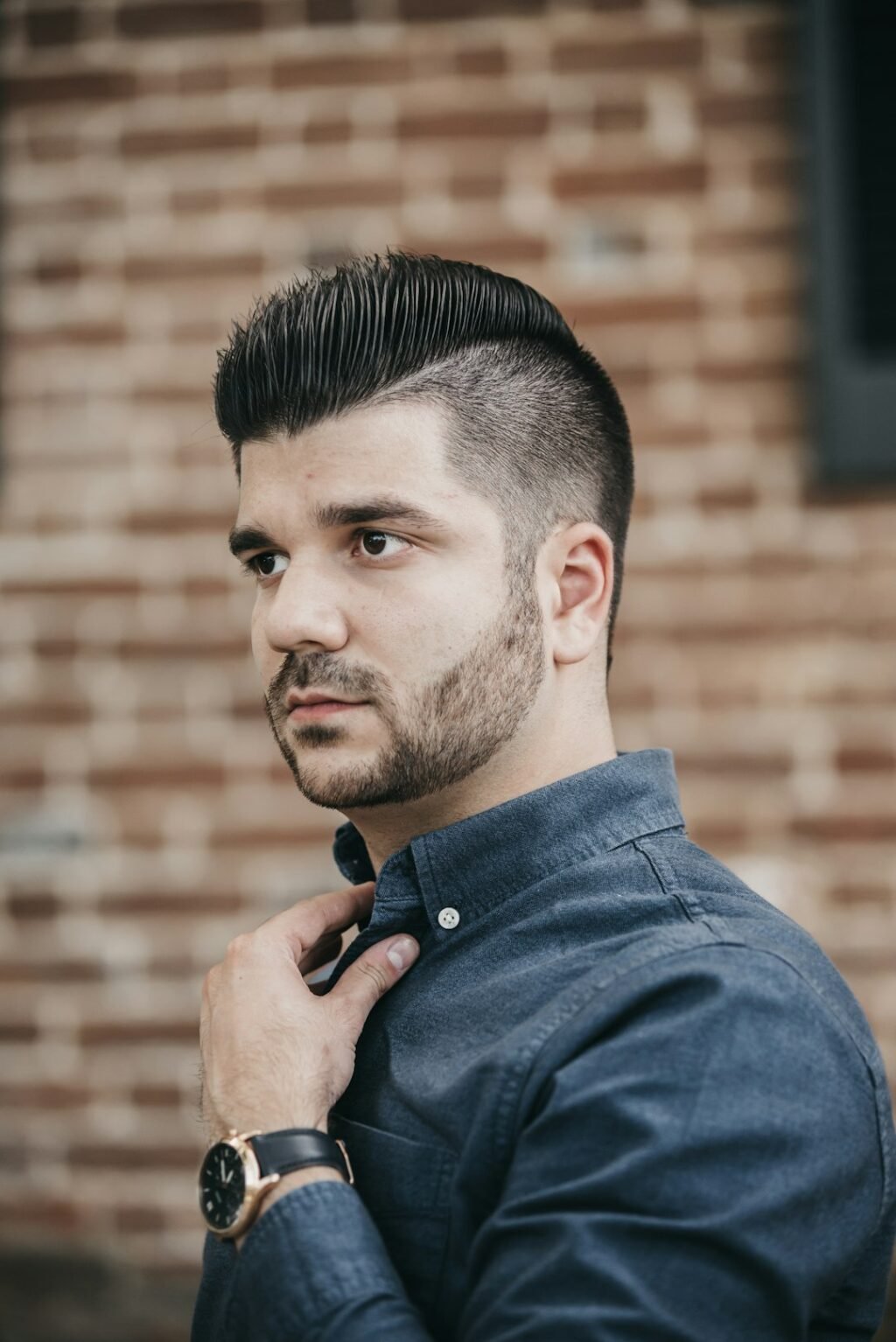
The pompadour is a classic men’s haircut with long, voluminous hair swept up and back from the forehead and shorter sides. It was named after Madame de Pompadour, the 18th-century French court figure who wore her hair high, and became an icon of 1950s rock ‘n’ roll style. Today’s pompadour is more flexible: it pairs with fades, undercuts and textured finishes, and works for straight, wavy and even curly hair. This guide covers the 15 best pompadour variations, what to tell your barber, how to style it at home, which products to use, and how to make it suit your face shape.
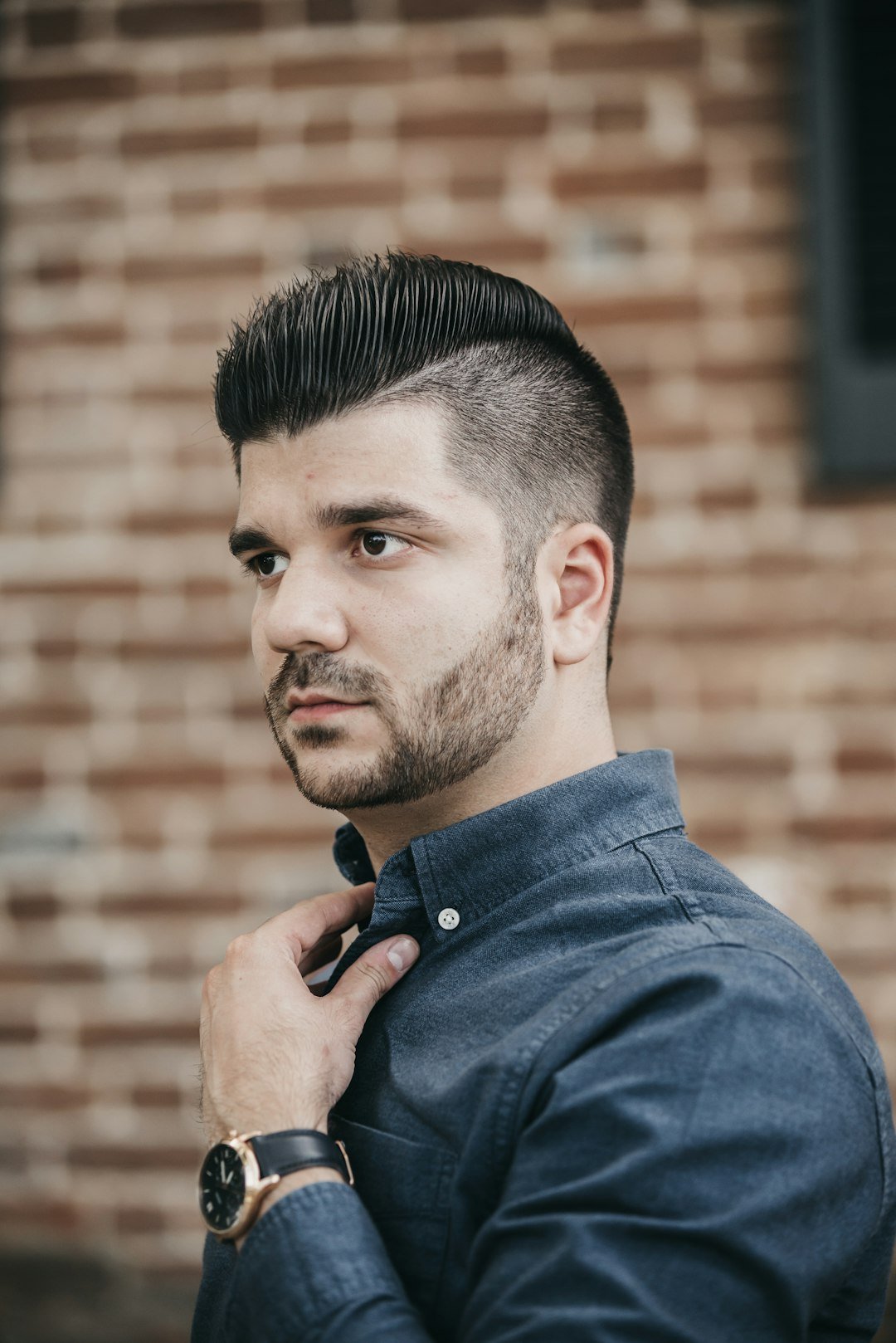
What Is a Pompadour Haircut?
A pompadour has three defining features: length on top (usually 3–6 inches at the front), height and volume at the fringe, and hair directed backwards rather than to the side. The sides can be anything from scissor-cut and slicked to a skin fade. It differs from a quiff, which is messier and often swept forward and up, and from a slick back, which is flat with little height.
| Style | Top | Direction | Finish |
|---|---|---|---|
| Pompadour | Long, high volume | Up and back | Smooth or textured |
| Quiff | Medium–long | Up and forward/side | Messy, textured |
| Slick back | Medium–long | Straight back, flat | Shiny, sleek |
| Faux hawk | Medium | Towards centre | Spiky |
15 Best Pompadour Styles
- Classic pompadour: high, glossy front with scissor-cut sides, styled with oil-based pomade.
- Modern pompadour: shorter sides and a matte, textured top for an everyday look.
- Low fade pompadour: fade starts just above the ears; office-friendly.
- Mid fade pompadour: balanced contrast that suits most face shapes.
- High skin fade pompadour: dramatic contrast, very clean sides.
- Taper pompadour: subtle shortening at the temples and neckline only.
- Undercut pompadour: disconnected short sides with no blend.
- Textured pompadour: point-cut top with clay for movement.
- Curly pompadour: lets natural curls create the height; use cream instead of heavy pomade.
- Side part pompadour: a hard or soft part adds a sharp, gentlemanly edge.
- Short pompadour: 2–3 inches on top for low maintenance.
- Long pompadour: 6+ inches for a rockabilly statement.
- Pompadour with beard: a full beard balances the height on top.
- Messy pompadour: blow-dried volume, finished with sea salt spray.
- Burst fade pompadour: fade curves around the ear for a bold modern look.
What to Ask Your Barber for a Pompadour
- How long you want the front (e.g. “4 inches at the fringe, tapering shorter towards the crown”).
- Side length or fade type (e.g. “mid fade starting at a #1”).
- Whether the top should be blended or disconnected (undercut).
- Texture: smooth and solid, or point-cut for a matte look.
- Bring two or three reference photos.
How to Style a Pompadour (Step by Step)
- Start with towel-dried hair. Damp, not soaking.
- Apply a pre-styler. Mist sea salt spray or work in a volumising mousse or grooming tonic.
- Blow-dry for height. Using a round or vent brush, lift the front up and back with medium heat; this step creates most of the volume.
- Dry the sides back and down so they sit flat.
- Warm your product. Rub a fingertip-sized amount of pomade or clay between your palms until it is invisible.
- Apply back to front, then front to back, so roots and ends are coated.
- Shape with a comb. Comb the front up and back, push slightly forward to create the wave, and smooth the sides.
- Lock it in with a light mist of hairspray if you need all-day hold.
Best Pompadour Products
| Product | Hold | Shine | Best for |
|---|---|---|---|
| Oil-based pomade | Medium–strong | High | Classic glossy pompadour; hard to wash out |
| Water-based pomade | Medium–strong | Medium–high | Shiny look that rinses out easily |
| Clay | Strong | Matte | Textured, modern pompadour; fine hair |
| Paste / fibre | Medium | Low–medium | Messy pompadour, natural finish |
| Cream | Light | Natural | Curly or thick hair |
| Sea salt spray | Light (pre-styler) | Matte | Adds grit before blow-drying |
Pompadour by Face Shape and Hair Type
- Round face: high pompadour with tight sides adds length.
- Square face: almost any version works; a classic pomp highlights the jaw.
- Oval face: the most flexible shape.
- Long or oblong face: keep height moderate and sides a little fuller.
- Fine or thinning hair: shorter textured pompadour with clay and a blow-dry.
- Thick hair: ask for weight removal on top so it doesn’t puff sideways.
How to Maintain a Pompadour
Book a trim every 3–4 weeks for faded sides or 5–6 weeks for scissor-cut sides. Wash oil-based pomade out with a clarifying shampoo or a pre-wash of conditioner on dry hair. Avoid daily high heat; use a heat protectant spray when blow-drying.
Find more hairstyle and grooming guides on our blog, and see our lip flip before and after guide for subtle facial refresh options.
Pompadour FAQs
How long does hair need to be for a pompadour?
At least 2–3 inches at the front for a short pompadour; 4–6 inches for a classic high look.
Can you do a pompadour with curly hair?
Yes. Keep the top slightly longer, use a curl cream or light pomade, and let curls form the volume rather than blow-drying them straight.
Is the pompadour still in style in 2026?
Yes. Textured and fade versions remain among the most requested barbershop styles because they suit both work and casual settings.
Pompadour vs quiff: which is easier?
The quiff is more forgiving because it is meant to look messy. A polished pompadour takes more practice with a blow-dryer and comb.
Sources