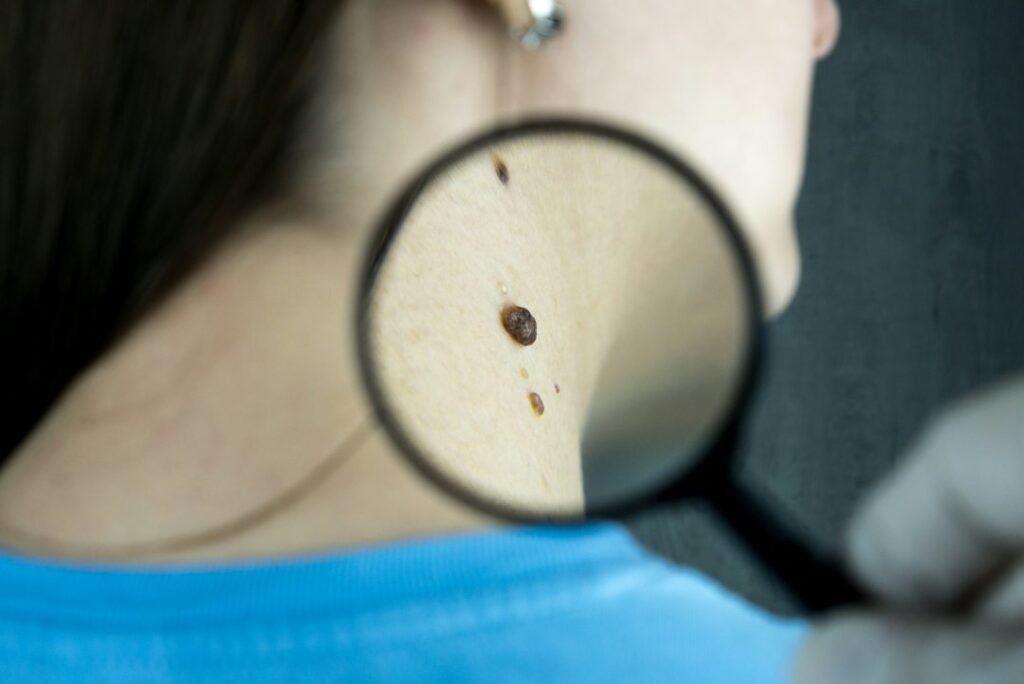
Skin tags (acrochordons) are small, soft, harmless growths of skin, usually skin-coloured or slightly darker, that often hang from a thin stalk. They are extremely common: researchers estimate that about half of adults will get at least one. Skin tags form where skin rubs against skin or clothing, such as the neck, armpits, eyelids, groin and under the breasts. They are not cancerous and do not need treatment unless they get irritated or you want them gone, in which case a dermatologist can remove them quickly in the office.
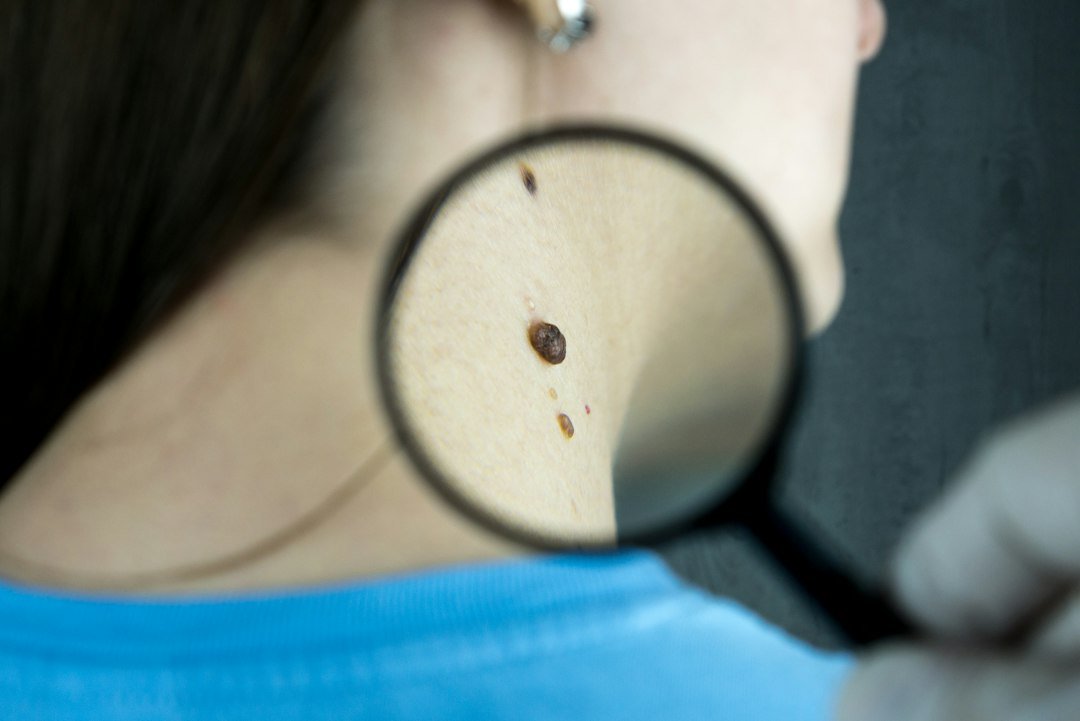
Skin Tags at a Glance
| Size | Usually 1 to 5 mm, occasionally a few centimetres |
| Feel | Soft, movable, often on a stalk |
| Common places | Neck, armpits, eyelids, groin, under the breasts |
| Cancer risk | Benign (not cancerous) |
| Treatment needed? | Only if irritated, bleeding or for cosmetic reasons |
7 Common Causes and Risk Factors
- Friction: skin rubbing against skin, collars, bra straps or jewellery.
- Age: more common from middle age onward.
- Weight gain: more skin folds mean more friction.
- Diabetes and insulin resistance: many skin tags can be a sign worth discussing with your doctor.
- Pregnancy: hormones and growth factors can trigger new tags, which sometimes shrink afterwards.
- Genetics: they often run in families.
- Rare conditions: such as Birt-Hogg-Dubé syndrome.
Skin Tag vs Mole vs Wart
| Skin tag | Mole | Wart | |
| Look | Soft flap on a stalk | Flat or raised, brown or black spot | Rough, grainy bump |
| Cause | Friction, genetics | Clusters of pigment cells | HPV virus |
| Contagious | No | No | Yes |
| Watch for | Irritation or bleeding | Changes in size, shape, colour (ABCDE signs) | Spreading |
Because some skin cancers can look like a harmless bump, have any new or changing growth checked by a dermatologist before trying to remove it.
Professional Skin Tag Removal
| Method | How it works | Good to know |
| Snip excision | Cut off with sterile scissors or a scalpel | Quick; may need numbing; tiny scab |
| Cryotherapy | Frozen with liquid nitrogen; falls off in 1 to 2 weeks | May leave a pale mark on darker skin |
| Electrocautery | Burned off with a heated device | Seals blood vessels; little bleeding |
| Ligation | Stalk tied off so it loses blood supply | Falls off within days |
Removal is usually quick with mild discomfort and leaves little or no mark. Because it is often considered cosmetic, insurance may not cover it unless the tag is irritated or bleeding.
Is At-Home Skin Tag Removal Safe?
Dermatologists generally advise against it. Cutting, tying, freezing kits, removal creams and remedies like apple cider vinegar or tea tree oil can cause bleeding, infection, chemical burns, scarring and incomplete removal. The biggest risk is treating something that is not actually a skin tag. Never attempt removal near the eyes or genitals at home.
How to Prevent Skin Tags
- Keep skin folds clean and dry; use powder in hot weather.
- Choose soft fabrics and avoid tight collars or chains that rub.
- Maintain a healthy weight and stay active.
- Ask your doctor to check blood sugar if you suddenly develop many skin tags.
Skin Tags on the Face and Around the Lips
Tags on the eyelids, face or near the lips should be removed only by a dermatologist, who can minimise marks in these visible areas. If you are planning cosmetic treatments around the mouth, mention any growths to your provider; see our lip flip before and after guide.
When to See a Doctor
- The growth bleeds, hurts or changes colour, size or shape.
- You are not sure it is a skin tag.
- You develop many tags quickly.
- It turns dark or black (it may have twisted and lost its blood supply).
Skin Tags FAQs
Do skin tags go away on their own?
Sometimes, if they twist and lose their blood supply, but most stay unless removed.
Do skin tags come back after removal?
A fully removed tag rarely comes back, but new ones can form nearby.
Are skin tags a sign of diabetes?
They are more common in people with diabetes and insulin resistance, but most people with skin tags do not have diabetes. Ask your doctor if you have other symptoms.
Can skin tags turn into cancer?
No. Skin tags are benign. Some cancers can look similar, which is why a dermatologist should check unusual growths.
This article is for general information. See our medical disclaimer. More skin guides on our blog.
Sources: Cleveland Clinic: Skin tags (acrochordons); GoodRx: Skin tags causes and removal; Banner Health: Removing skin tags.