Before-and-after photos on Instagram can make a lip flip look almost like a filler treatment, but the reality is usually far more subtle. Understanding lip flip results vs expectations ahead of time is one of the biggest factors in whether patients walk away happy or disappointed with a treatment that, medically speaking, went exactly as planned.
A lip flip doesn’t add volume. It relaxes a small muscle so your upper lip rolls slightly outward, creating a fuller appearance without any added product. That distinction alone explains most of the gap between what people expect and what they actually see in the mirror.
This guide breaks down what a lip flip realistically delivers, where expectations commonly go wrong, how results compare to filler, and how to walk into your consultation with a clear, accurate picture of what’s possible.
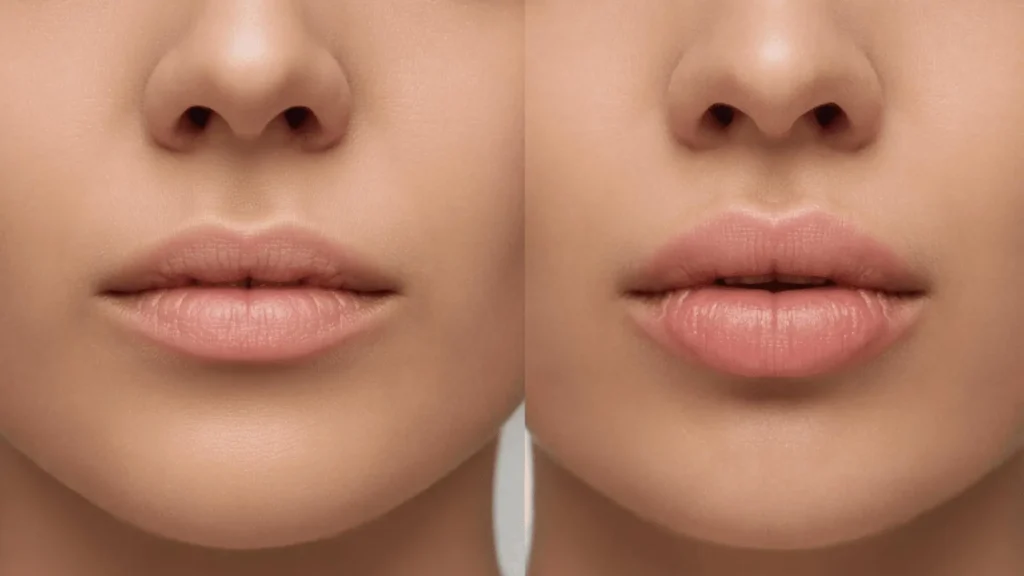
Most patients expect dramatic, filler-like fullness, but real lip flip results are subtle: a slight outward roll of the upper lip and a bit more visible pink when smiling. The gap between lip flip results vs expectations usually comes down to comparing it to volume-based treatments rather than understanding it as a muscle-relaxing procedure.
Table of Contents
Key Takeaways
- A lip flip doesn’t add volume; it changes lip position, not lip size.
- Results are typically subtle and most visible when smiling or talking.
- Photos labeled “lip flip” online sometimes actually show filler or a combination treatment.
- Full results take 5–7 days to develop after treatment.
- Realistic expectations come from understanding the mechanism, not just viewing before-and-after photos.
- A detailed consultation is the most reliable way to align expectations with your specific anatomy.
What a Lip Flip Actually Does
A lip flip uses a neuromodulator, most often Botox, injected into the orbicularis oris muscle around the upper lip. Relaxing this muscle allows more of the pink part of the lip to show, creating a fuller-looking pout without changing the lip’s actual volume. For the full breakdown, see what is a lip flip and how does a lip flip work.
This is the core reason expectations and results sometimes clash: a lip flip changes position, not size. If someone is expecting significantly bigger lips, comparing lip flip results vs expectations built around filler photos will almost always lead to disappointment, even when the treatment worked exactly as intended.
Common Expectations vs. Realistic Outcomes
| What Patients Often Expect | What a Lip Flip Actually Delivers |
| Significantly larger, plumper lips | A subtle outward roll with slightly more visible lip |
| Dramatic change at rest | Most noticeable when smiling or talking |
| Permanent or long-lasting change | Temporary results lasting 8–12 weeks |
| Immediate results right after injection | Full effect develops over 5–7 days |
| Fixes asymmetry completely | Can soften but not always fully correct natural asymmetry |
| Works like filler | Works through muscle relaxation, not added volume |
Comparing your own goals against this table before booking is one of the simplest ways to close the gap between expectation and reality.
Why the Expectation Gap Happens
Social Media and Marketing Photos
Many “lip flip” photos circulating online actually show filler, a combination treatment, or heavily angled/lit photography that exaggerates the change. This skews public perception of what the treatment alone can do.
Confusing a Lip Flip With Filler
This is the single most common source of mismatched expectations. A lip flip and lip filler work through completely different mechanisms; comparing them directly at lip flip vs lip filler or lip filler vs lip flip can clear up a lot of confusion before treatment.
Underestimating How Subtle the Change Is
Because a lip flip works on muscle position, the difference is often most visible during specific expressions like smiling, rather than as a dramatic change at rest. Reviewing real lip flip before and after photos at rest and while smiling helps set a more accurate mental picture.
Skipping a Thorough Consultation
Patients who go in without discussing their specific lip anatomy, goals, and the treatment’s actual mechanism are more likely to be surprised by the outcome, even when the procedure was performed well.
How Lip Flip Results Actually Develop Over Time
Results don’t appear instantly. Here’s the general pattern most patients experience:
- Day 0–2: Minimal visible change; muscle hasn’t fully relaxed yet.
- Day 3–5: Gradual softening begins; subtle differences start showing.
- Day 5–7: Full effect typically visible.
- Week 8–12: Effect gradually fades as muscle function returns.
For a more detailed breakdown, see lip flip results day by day and when will I see lip flip results.
Who Tends to Be Happiest With Their Results
Patients report the highest satisfaction when they:
- Understand the treatment targets position, not volume.
- Have realistic goals, like softening a gummy smile or adding subtle fullness.
- View a lip flip as one part of a broader look rather than a total transformation.
- Discuss their specific lip shape and concerns openly during consultation.
Patients with thinner lips or a naturally flatter smile sometimes see a more noticeable difference than those seeking major volume change. Real examples can help calibrate expectations; see lip flip on thin lips and lip flip for smokers lines.
Pros and Cons Relative to Expectations
Pros
- Subtle, natural-looking enhancement without added volume.
- No filler-related risks like lumps or migration.
- Quick appointment with minimal downtime.
- Reversible over time since the effect fades naturally.
Cons
- Results are genuinely subtle and won’t replicate filler-level volume.
- Temporary, requiring repeat treatment to maintain.
- Less dramatic change for patients seeking significant size increase.
- Full effect takes about a week to develop, not instant.
Mistakes That Widen the Expectation Gap
- Booking based solely on social media photos without confirming what treatment was actually shown.
- Not asking your provider directly, “What will this realistically look like on my lips?”
- Expecting results to match a friend’s outcome despite different lip anatomy.
- Judging results too early, before the 5–7 day mark when full effect appears.
- Assuming a lip flip can fully correct significant asymmetry or volume loss.
How to Set Accurate Expectations Before Your Appointment
Featured Snippet Answer: To set realistic lip flip expectations, review real before-and-after photos of the treatment alone (not combined with filler), understand that it changes lip position rather than volume, and discuss your specific goals and anatomy directly with your injector during a consultation.
- Research the mechanism, not just the photos. Understanding how a lip flip works prevents comparing it to filler-based results.
- Bring reference photos to your consultation. Show your provider exactly what you’re hoping for so they can explain what’s realistic for your anatomy.
- Ask specific questions. “Will this add size or just change shape?” is a fair, direct question to ask before treatment.
- Review your own lip shape honestly. Naturally fuller lips may see a subtler visible change than thinner ones.
- Wait the full 5–7 days before judging results. Early impressions can be misleading before the effect fully develops.
A proper lip flip consultation is the best place to have this conversation directly with a qualified provider rather than relying on guesswork.
This article is intended for general educational purposes and isn’t a substitute for personalized medical advice. Individual results vary based on anatomy, dosage, and technique.
Frequently Asked Questions
Can a lip flip make my lips look bigger, or just different? A lip flip changes lip position by relaxing the upper lip muscle, which can create a fuller appearance without technically adding size or volume.
Why do my lip flip results look smaller than photos I saw online? Many online photos labeled “lip flip” actually show filler or combination treatments, which naturally produce a more dramatic size change.
Is it normal to feel disappointed after a lip flip? It’s a common reaction if expectations were set around filler-level change. Reviewing accurate before-and-after examples beforehand can help prevent this.
Can I add filler later if my lip flip results feel too subtle? Yes, many patients combine both treatments over time. See lip flip with filler for how they can work together.
Will my lip flip results look different smiling versus at rest? Yes, the change is often most visible while smiling or talking, since that’s when the treated muscle is most active.
How can I tell if a before-and-after photo is really just a lip flip? Look for subtle changes in lip position and smile shape rather than significant added volume, which typically indicates filler was also used.
Does lip shape affect how noticeable my results will be? Yes, patients with thinner or flatter lips at baseline sometimes see a more noticeable relative change than those with naturally fuller lips.
Can a lip flip fix uneven lips? It may soften mild asymmetry in some cases, but it isn’t designed to fully correct significant unevenness on its own.
Is it possible to get filler-like results with just a higher lip flip dose? No, dosage affects how long the muscle stays relaxed, not how much volume is added, so a higher dose won’t replicate filler-level fullness.
How soon can I judge whether my results match my expectations? Wait until day 5–7, once the effect has fully developed, before deciding how your results compare to what you expected.
Should I bring photos of myself or celebrities to my consultation? Photos of your own lips at different angles, plus a few reference images, help your provider explain realistically what’s achievable for your specific anatomy.
Summary
The gap between lip flip results vs expectations almost always comes down to one misunderstanding: a lip flip changes lip position through muscle relaxation, not lip volume. Once that distinction is clear, most patients find the actual results align well with what the treatment is designed to do. Reviewing accurate photos, asking direct questions at your consultation, and waiting the full week for results to develop are the best ways to walk in with expectations that match reality.