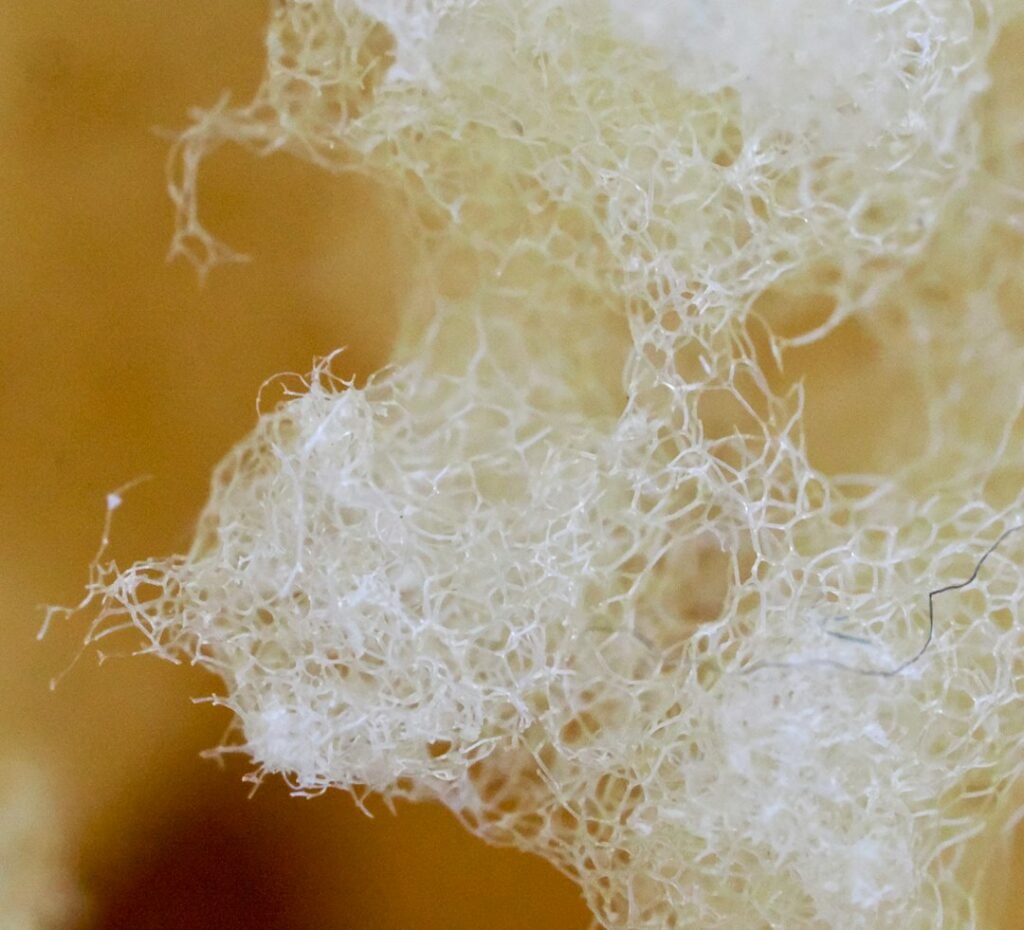
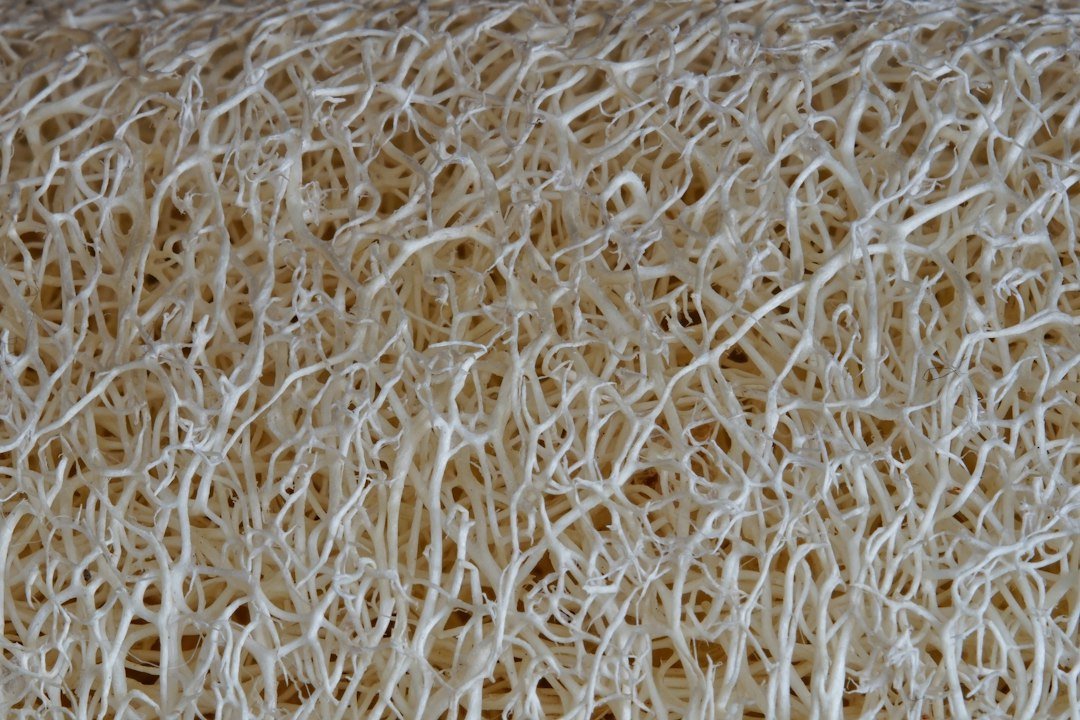
A loofah (also spelled luffa) is a scrubby shower sponge used to lather soap and exfoliate the body. Natural loofahs are the dried fibres of a gourd from the cucumber family, while the colourful mesh “poufs” sold in most shops are made of plastic. Used correctly, a loofah gently removes dead skin and makes body wash go further. Used carelessly, its damp, tangled fibres can trap dead skin and bacteria, which is why many dermatologists recommend cleaning it weekly and replacing it every few weeks.
Loofah at a Glance
| What it does | Lathers soap and exfoliates dead skin |
| Use on | Body only, not the face or genitals |
| Exfoliate with it | 1 to 2 times a week (lighter use for lathering is fine more often) |
| Clean | Rinse and dry after every shower; disinfect weekly |
| Replace | Natural: every 3 to 4 weeks. Plastic: about every 2 weeks (some say up to 2 months) |
Natural vs Plastic Loofah
| Natural loofah | Plastic pouf | |
| Made from | Dried luffa gourd fibres | Nylon or polyethylene mesh |
| Texture | Firm, becomes softer when wet | Soft, very foamy |
| Exfoliation | Stronger | Gentler |
| Hygiene | Can hold moisture; must dry fully | Many folds trap skin cells |
| Environment | Biodegradable and compostable | Sheds microplastics; goes to landfill |
| Best for | Normal, oily or rough skin (for example on elbows and knees) | People who mainly want lather |
How to Use a Loofah Without Irritating Your Skin
- Soak it first: wet a natural loofah in warm water for a minute until it softens.
- Add a little body wash: squeeze to build lather.
- Use light, circular strokes: exfoliation should feel gentle, never scratchy.
- Focus on rough areas: elbows, knees, heels and the backs of arms.
- Skip delicate areas: never use it on the face, the genitals or broken skin.
- Moisturise after: apply body lotion to damp skin to lock in hydration.
How to Clean a Loofah
- After every shower: rinse out all soap, squeeze out water and hang it outside the shower in a dry, airy spot.
- Once a week: soak it for about 5 minutes in a diluted disinfectant, such as a weak bleach solution (about 1 part bleach to 10 parts water) or diluted vinegar. Rinse well with cool water.
- Dry completely: bacteria and mould grow on loofahs that stay damp.
- Do not store it in the shower: the humidity keeps it wet all day.
How Often Should You Replace a Loofah?
Replace a natural loofah every 3 to 4 weeks and a plastic pouf roughly every 2 weeks, or sooner if you see any of these signs:
- Mould, black spots or mildew
- A musty or sour smell
- Discolouration or slimy feel
- Fibres falling apart
- You had a skin infection while using it
Are Loofahs Bad for You?
Not if you look after them. The problem is that loofahs are full of crevices that collect dead skin and stay damp, which is the perfect place for bacteria such as Staphylococcus, Streptococcus, E. coli and Pseudomonas. If you then scrub skin with small cuts or freshly shaved areas, those bacteria can cause irritation or infection. Clean, dry and replace your loofah regularly and the risk stays low.
Who Should Avoid Loofahs?
- People with sensitive skin, eczema, rosacea or psoriasis flare-ups
- Anyone who has just shaved; wait a few days to avoid infecting tiny nicks
- People with open wounds, cuts or active skin infections
- Anyone using strong exfoliating products like retinoids or AHAs on the body
5 Loofah Alternatives
| Alternative | Pros | Cons |
| Washcloth | Cheap, machine washable, use a fresh one each time | Less lather |
| Silicone body scrubber | Dries fast, easy to clean, lasts months | Gentler exfoliation |
| Exfoliating (Korean/Italy) towel | Strong exfoliation, washable | Too harsh for sensitive skin |
| Natural sea sponge | Soft, no added chemicals | Must dry fully; replace often |
| Hands plus a gentle scrub | Most hygienic | Uses more body wash |
The African net sponge is another popular option: a long, quick-drying nylon net that reaches your back easily. Browse our beauty blog for more body-care guides.
Loofah FAQs
Is a loofah a plant or a sea sponge?
A natural loofah is a plant: the dried inside of a luffa gourd. Sea sponges are a different, animal-based product.
Can you use a loofah on your face?
No. Facial skin is thinner and more sensitive; use a soft washcloth or gentle cleanser instead.
Can you put a loofah in the washing machine or microwave?
Plastic poufs can go in a laundry bag on a gentle cycle. Some people microwave a damp natural loofah for a few seconds, but it can catch fire if dry, so a disinfecting soak is safer.
Do dermatologists recommend loofahs?
Many prefer washcloths or silicone scrubbers because they are easier to keep clean, but a well-maintained loofah is fine for most healthy skin.
Sources: MedicineNet: Are loofahs bad for you?; Yahoo Lifestyle: Why dermatologists want you to ditch your loofah; TODAY: Best loofah alternatives.