Asking how many units for a lip flip is one of the smartest questions you can bring into a consultation, because dosing is really the difference between a subtle, natural-looking result and one that looks obviously overdone. There isn’t a single universal number that works for everyone. The right dose depends on your muscle strength, your natural lip shape, and exactly how much lift you’re hoping to see.
Most lip flips use somewhere between 4 and 10 units of Botox total, split between the upper lip and sometimes the lower lip, but that range exists for a reason. This guide breaks down exactly what goes into that number, how dosing differs by treatment area, what happens if too much or too little is used, and the questions worth asking your injector before your appointment.
Most lip flips use between 4 and 10 units of Botox total, commonly around 2 to 4 units in the upper lip and about 2 units in the lower lip if it’s treated as well. The exact dose depends on your muscle strength, lip anatomy, and desired result, and should always be determined by your injector during a consultation.
Table of Contents
Key Takeaways
- Most lip flips use 4 to 10 units of Botox total, though individual needs vary.
- A common baseline is 2 to 4 units in the upper lip and about 2 units in the lower lip, if treated.
- Stronger upper lip muscles, wider mouths, or a bigger desired change generally require more units.
- More units isn’t automatically better — overdosing can cause an unnatural look or temporary functional side effects.
- Dosing can vary by product type (Botox, Dysport, Xeomin, Jeuveau), since each has different unit conversions.
- Your injector’s assessment during a consultation is far more reliable than any generic number found online.
What Determines How Many Units You’ll Need?
Muscle Strength
The orbicularis oris, the muscle that circles the mouth and is targeted in a lip flip, varies in strength from person to person. Someone with a naturally stronger, more active upper lip muscle typically needs more units to achieve the same degree of relaxation as someone with a weaker or less active muscle. Your injector can usually assess this by watching how your lip moves when you smile, purse your lips, or speak.
Lip Anatomy and Width
The width of your mouth and the natural shape of your upper lip also factor into dosing. A wider mouth may require units spread across a slightly larger area, which can mean a few more units total compared to a narrower mouth needing more concentrated placement.
Desired Degree of Change
Some patients want a very subtle lift, just enough to make the lip look slightly fuller without anyone quite being able to pinpoint why. Others want a more noticeable flip. Generally, a more subtle goal uses fewer units, often on the lower end of the 4 to 10 unit range, while a more pronounced result may call for a few units more, always balanced against the risk of overdoing it.
Whether the Lower Lip Is Treated
A lip flip is most commonly associated with the upper lip, but some providers also treat the lower lip for a more balanced result. If both lips are treated, expect the total unit count to be higher than an upper-lip-only treatment. Cleveland Clinic outlines a common approach of around 2 to 4 units in the upper lip and about 2 units in the lower lip as a general reference point, though your specific plan should come from your own consultation.
Gummy Smile Correction
If your primary goal is reducing a gummy smile rather than just enhancing lip visibility, your injector may adjust placement and dosing slightly differently than a standard cosmetic lip flip. You can see more on this specific goal in Lip Flip Before and After Gummy Smile.
Typical Unit Ranges by Goal
| Goal | Typical Unit Range |
| Very subtle enhancement | 4–6 units |
| Standard, noticeable lip flip | 6–8 units |
| Fuller flip or treating both lips | 8–10 units |
| Gummy smile correction | Varies, based on individual assessment |
These ranges are general reference points, not fixed prescriptions. Your actual dose should always be determined by an in-person assessment of your lip anatomy and muscle strength.
Where Are the Units Actually Injected?
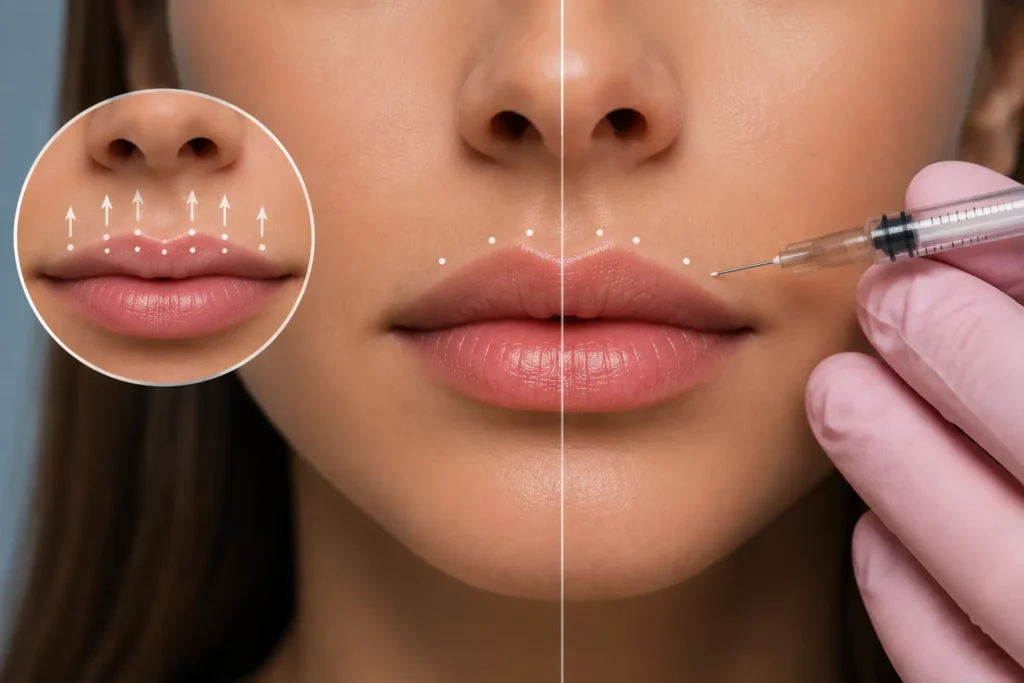
Units for a lip flip aren’t injected in one single spot. They’re typically distributed across a few specific points, including the corners of the mouth (the oral commissures) and along the edges of the lips (the vermillion border). This spread helps create a more even, natural-looking result rather than concentrating all the relaxation in one small area. You can see the specific injection points explained in more depth in lip flip injection sites and where to inject Botox for lip flip.
Does the Product Type Change the Unit Count?
Yes, this matters more than many patients realize. Botox and Xeomin generally use a similar unit-for-unit dosing scale, so a lip flip requiring 6 units of Botox would typically use a similar number of Xeomin units. Dysport works differently, since it requires roughly 2.5 to 3 units to equal 1 unit of Botox, meaning a Dysport lip flip will involve a noticeably higher total unit count for the same effect. You can compare this directly in dysport-lip-flip and xeomin-vs-botox-lip-flip. Jeuveau typically follows a dosing scale closer to Botox, though off-label use for lip flips means less standardized public data exists, as discussed in lip-flip-vs-jeuveau.
What Happens If Too Many Units Are Used?
Overdosing a lip flip is one of the more common causes of an unnatural or uncomfortable result. Because the muscle around the mouth controls speaking, drinking, and puckering, too much relaxation can lead to:
- A flattened or overly stiff-looking smile
- Difficulty pursing the lips, such as when drinking through a straw or whistling
- Mild drooling or trouble controlling fluids while eating or drinking
- Temporary difficulty forming certain sounds while speaking clearly
These effects are generally temporary and resolve as the Botox wears off, typically within a few months, but they’re uncomfortable enough that most people would prefer to avoid them entirely. You can read more about this in lip flip gone wrong and bad lip flip.
What Happens If Too Few Units Are Used?
Underdosing is a much lower-risk mistake, though it can lead to a result that’s barely noticeable or wears off unevenly faster than expected. If your results seem too subtle after about two weeks, once the treatment has fully settled, this is worth discussing with your injector, since a small touch-up may be appropriate. See how long does it take for a lip flip to work for a full timeline on when to judge your final result.
Step-by-Step: How Your Injector Determines Your Dose
- Your injector observes your resting lip position and how your upper lip moves when you smile, speak, and purse your lips.
- They assess the width of your mouth and the natural thickness and shape of your upper lip.
- They discuss your specific goals, whether that’s subtle enhancement, gummy smile correction, or a more noticeable lift.
- Based on this assessment, they recommend a starting unit count, often on the more conservative end for first-time patients.
- After your results settle over about two weeks, a small touch-up can often be added if needed, without requiring you to wait for a full new dose.
Common Mistakes to Avoid
- Assuming a specific unit count you saw online applies to you. Dosing is highly individual and depends on your own anatomy and muscle strength.
- Requesting more units to guarantee a “bigger” result. Overdosing risks an unnatural or functionally uncomfortable outcome rather than simply a fuller look.
- Not accounting for product differences. A “unit” of Dysport is not equivalent to a unit of Botox, so comparing raw numbers across products is misleading.
- Judging results too early. Full results take about two weeks to settle, so it’s best to wait before deciding whether your dose was right.
- Choosing an inexperienced injector to save money. Precise, individualized dosing in this small treatment area depends heavily on the provider’s skill and experience.
Tips for Getting the Right Dose
- Be specific with your injector about how subtle or noticeable you want the result to be.
- Mention if you’ve had a lip flip before and whether the dose felt right, too strong, or too subtle.
- Ask your injector to explain their reasoning for the specific unit count they recommend for you.
- If you’re switching products, such as from Botox to Dysport, ask how the unit count will change accordingly.
- Start conservatively if you’re a first-time patient, since it’s easier to add a touch-up than to wait out an overdosed result.
Warnings and Limitations
Botulinum toxin dosing for a lip flip should always be determined through an individualized, in-person consultation and assessment, not a fixed number applied the same way to every patient. Because the lip flip targets a small, functionally important muscle area involved in speaking, eating, and drinking, incorrect or excessive dosing can lead to temporary but noticeable functional side effects. This treatment should only be performed by a licensed provider, such as a physician, nurse injector, or physician assistant trained specifically in facial injectables.
This article provides general educational information about typical dosing ranges and isn’t a substitute for a professional consultation, where your specific anatomy and goals can be properly assessed before determining your unit count.
Frequently Asked Questions
How many units of Botox are needed for a lip flip? Most lip flips use between 4 and 10 units total, though the exact number depends on individual muscle strength, lip anatomy, and desired results.
Is more units always a stronger, better result? No. Too many units can cause an unnatural look or temporary difficulty with speaking, drinking, or pursing the lips. The right dose is one that’s carefully matched to your anatomy, not the highest possible amount.
How many units are used in the upper lip versus the lower lip? A common general reference is around 2 to 4 units in the upper lip and about 2 units in the lower lip if it’s also treated, though your injector’s specific assessment matters more than any fixed number.
Do Dysport and Botox use the same unit count for a lip flip? No. Dysport requires roughly 2.5 to 3 units to equal 1 unit of Botox, so a Dysport lip flip will typically involve a higher total unit count for a similar effect.
What happens if I get too few units for my lip flip? Results may be more subtle than expected or fade a bit sooner. A touch-up can often be added after your results settle if the initial dose feels too light.
Can I ask my injector exactly how many units they’re using? Yes, and you should. A transparent, experienced injector should be able to explain their recommended dose and reasoning clearly.
Does a gummy smile correction require a different number of units? It can, since the goal and technique may be slightly different from a standard cosmetic lip flip. Your injector will determine this based on your specific smile pattern.
How do I know if my dose was too high? Signs can include difficulty drinking through a straw, mild drooling, or trouble forming certain sounds clearly. These effects are temporary and fade as the Botox wears off.
Should first-time patients start with fewer units? Many injectors recommend a more conservative starting dose for first-time patients, since it’s easier to add a touch-up than to wait out an overdosed result.
Does mouth width affect how many units I need? Yes, a wider mouth may require units spread across a slightly larger area, which can affect the total unit count needed for an even result.
Can my unit count change if I get repeat lip flip treatments? Yes, some patients find their muscle response changes slightly over time or with repeated treatment, so your injector may adjust your dose at future appointments based on your results.
Is unit count the same for men and women? Not necessarily. Dosing is based on individual muscle strength and lip anatomy rather than gender specifically, though men often have stronger perioral muscles on average, which can factor into an injector’s assessment.
Summary: How Many Units for a Lip Flip
There’s no single correct answer to how many units for a lip flip works best, since the right number depends entirely on your muscle strength, lip shape, and how noticeable you want the result to be. Most lip flips fall somewhere between 4 and 10 units total, often split between the upper and lower lip, but this range exists precisely because individual anatomy varies so much.
The most reliable way to determine your ideal dose isn’t a generic number from an article. It’s a consultation with an experienced injector who can assess your specific lips, discuss your goals, and recommend a starting dose that can always be fine-tuned with a small touch-up once your results settle.