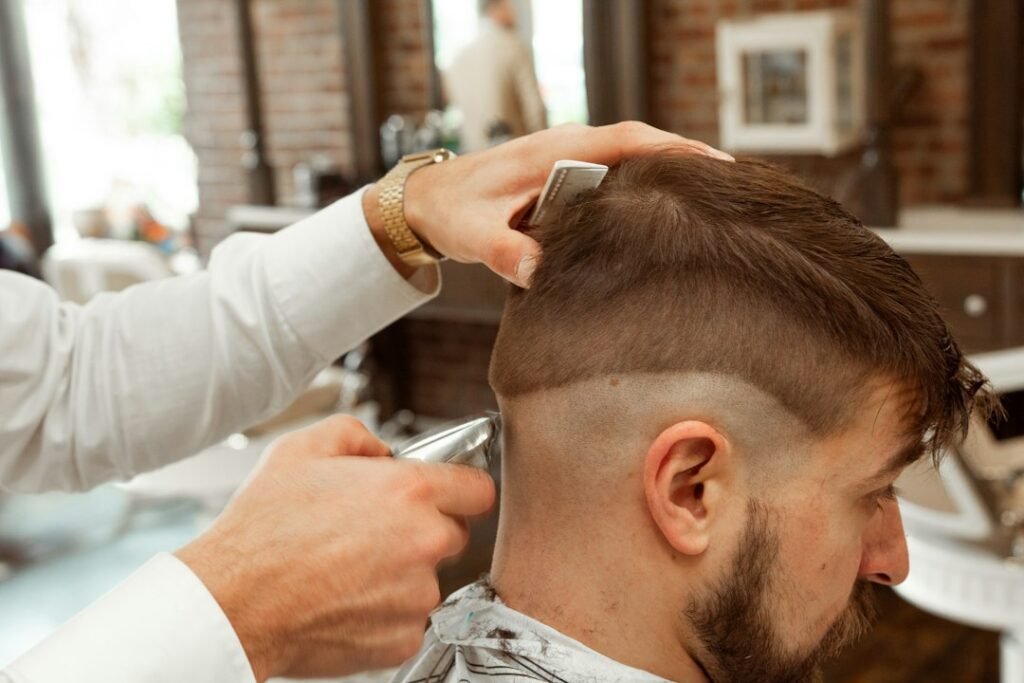
A taper fade is a haircut where the hair gets gradually shorter around the sideburns and the neckline, while the top stays long enough to style. It is cleaner than a classic taper but softer than a full fade, which is why it has become one of the most requested men’s haircuts in barbershops. It works on straight, wavy, curly and coily hair, and it looks just as good in an office as it does on the weekend.
This guide explains the difference between a taper and a fade, the main types of taper fade, the clipper guard numbers barbers use, the best top styles to pair with it, and exactly what to say so you walk out with the cut you wanted.
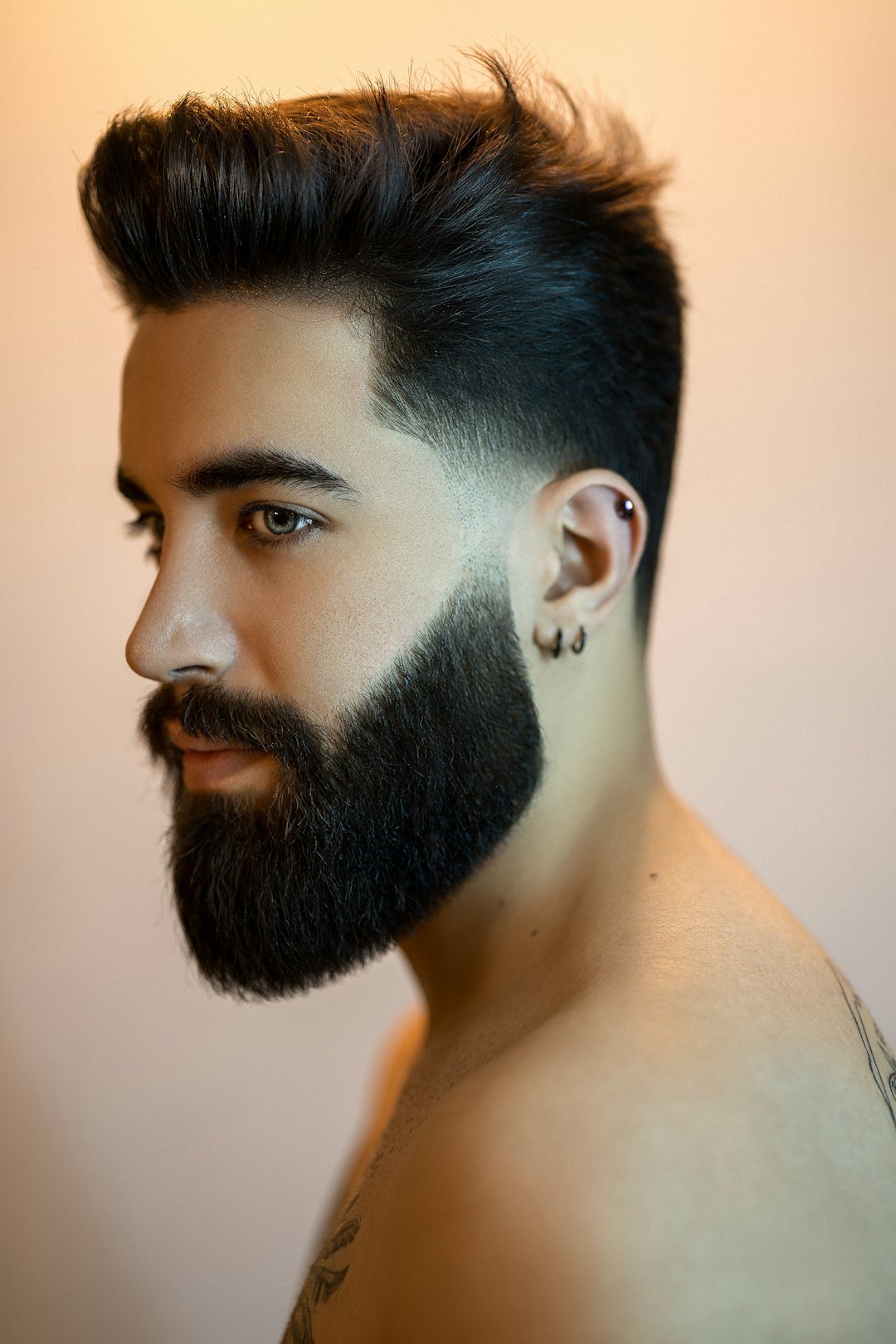
Taper Fade at a Glance
| Where it is cut short | Sideburns and neckline (low taper) up to the temples (high taper) |
| Top length | Anything from a short crop to 10 cm or more |
| Suits | All hair types and most face shapes |
| Looks sharp for | About 2 weeks |
| Barber visits | Every 2 to 4 weeks |
| Typical price | Similar to a standard men’s cut, often more for skin-level finishes |
Taper vs Fade vs Taper Fade: What Is the Difference?
Barbers use these words differently, which is why so many people get the wrong haircut. Here is the simplest way to understand them:
| Cut | Where hair is shortened | Contrast | Grows out in |
| Taper | Only the sideburns and neckline | Subtle | About 3 to 4 weeks |
| Taper fade | Starts at the sideburns and neckline and blends shorter, often near the skin | Medium | About 2 to 3 weeks |
| Fade | The whole back and sides, often down to skin | High | About 2 to 3 weeks, faster for skin fades |
| Blend | Sides blended into the top with no visible line | Very low | About 4 to 6 weeks |
In short, a taper fade keeps most of the hair on the sides and only fades the edges, so it looks neat without the bold, shaved look of a full skin fade.
Types of Taper Fade
Low Taper Fade
The fade starts right at the natural hairline around the ears and neck. It is the safest and most versatile option, works for school and work, and grows out the most cleanly. Ideal if you are trying a taper fade for the first time.
Mid Taper Fade
The fade line sits a little higher, roughly a centimetre above and behind the ears. It gives more contrast than a low taper while still looking tidy. Expect a clean-up every two to three weeks.
High Taper Fade
The fade starts near the temples, so more scalp shows on the sides. It suits dark, thick or curly hair, where the contrast stands out most. It is the most dramatic version and needs the most frequent touch-ups.
Burst Taper Fade
The fade curves in a semicircle around the ear and leaves more length at the back of the neck. It is often paired with a mohawk, curly top or modern mullet. It loses its shape quickly, so plan on a visit about every two weeks.
Drop Taper Fade
The fade line drops lower behind the ear, following the curve of the head. It adds shape at the back and looks good with longer tops.
Skin (Bald) Taper Fade
The lowest part of the taper is taken down to the skin with a foil shaver or razor. It looks very sharp but shows regrowth within days.
Taper Fade Clipper Guard Numbers
Knowing the guard numbers helps you explain how short you want the sides. Sizes vary slightly by brand, but most clippers follow this scale:
| Guard | Approx. length | Typical use in a taper fade |
| No guard (0) | About 1.5 mm | Bottom of the fade, near-skin finish |
| #0.5 | About 1.5 to 2 mm | Softening the lowest line |
| #1 | 3 mm (1/8 inch) | Lower part of the fade |
| #2 | 6 mm (1/4 inch) | Middle of the fade |
| #3 | 10 mm (3/8 inch) | Blending into the sides |
| #4 | 13 mm (1/2 inch) | Top of the sides on longer cuts |
A common request is “a low taper fade from a 1 up to a 3, scissors on top.” If you want it shorter, ask to start from a 0 or skin.
10 Best Taper Fade Styles
- Taper fade with textured crop: a short, choppy top with a slight fringe. Low effort and very popular.
- Taper fade with curly top: keeps the volume of curls while removing bulk at the sides.
- Afro taper: a low taper on coily hair that keeps the shape round and neat. Choose a barber experienced with Afro hair.
- Taper fade with waves: a low taper that frames 360 waves without breaking the pattern.
- Taper fade with quiff: longer front pushed up and back, for a classic smart look.
- Taper fade with pompadour: a high, slicked-back top that contrasts with tight sides.
- Taper fade with comb-over: a side part and polished top. Ideal for the office.
- Taper fade buzz cut: a short buzz on top with tapered edges for an ultra-low-maintenance look.
- Taper fade with long hair (flow): faded sideburns with longer hair at the back, close to a modern mullet.
- Taper fade with beard: the fade blends into the beard for a seamless line from hair to jaw.
Which Taper Fade Suits Your Hair Type and Face Shape?
| You have | Best choice |
| Straight, fine hair | Low taper fade with a textured crop to add body |
| Thick, wavy hair | Mid taper fade to remove weight from the sides |
| Curly or coily hair | Low or burst taper fade to keep volume on top |
| Receding hairline | Low taper fade with a short, forward-styled top |
| Round face | Mid or high taper with height on top to lengthen the face |
| Long face | Low taper with less height and some fringe |
| Square face | Almost any taper fade; a textured top softens strong angles |
How to Ask Your Barber for a Taper Fade
Saying only “taper fade” leaves too much to guesswork. Cover these four points:
- Height: low, mid, high or burst.
- How short at the bottom: skin, a 0, or a 1.
- The back: tapered neckline (most natural), rounded or squared.
- The top: how much length to keep and how you style it.
Example script: “Low taper fade around the sideburns and neckline, starting from a 1, tapered neckline, and keep about 5 cm on top with scissors for a textured crop.” Bring photos from the front, side and back.
How to Style and Maintain a Taper Fade
- Matte paste or clay: best for crops and textured tops.
- Pomade: for slick, shiny styles like pompadours and comb-overs.
- Curl cream: for curly tops, applied to damp hair.
- Sea salt spray: adds grip and volume before blow-drying.
- Gentle shampoo: very short sides expose the scalp, so a mild shampoo helps avoid irritation.
A taper fade looks its sharpest for about two weeks. Low tapers can stretch to four weeks between cuts; mid, high and burst versions usually need a clean-up every two to three weeks. Some barbers offer a cheaper “line-up” or neckline tidy between full cuts.
Taper Fade FAQs
Is a taper fade professional?
Yes. A low taper fade with a neat top is one of the most work-friendly modern haircuts.
What is the difference between a low taper and a low fade?
A low taper only shortens the sideburns and neckline. A low fade shortens the whole lower band around the head, so more scalp shows.
Can you get a taper fade with long hair?
Yes. Ask for a low taper on the sideburns and neckline only, and keep the length at the back and on top.
Can I do a taper fade at home?
It is possible with clippers and guards, but blending is hard to see on your own head. Most people get a cleaner result from a barber, especially for the first cut.
For more style guides, browse our beauty and grooming blog.
Sources: Man of Many: Best taper fade haircuts, according to a barber; Wolfshead: Taper vs fade vs blend; AMR: How to tell your barber what you want.